How to Scale Training Across Multi-Location and Multi-Shift Workforces

Training across multiple plants, rotating crews, and 24/7 production schedules is one of the biggest operational challenges manufacturing and mining leaders face. When every location runs slightly differently, and turnover remains high, traditional training methods quickly break down. This is especially true in mining operations where crews rotate between remote sites under strict regulatory oversight.
Scalable training doesn’t require rebuilding everything. It requires building a system that balances compliance, flexibility, and simplicity across every location and shift.
Why Scaling Workforce Training Is Harder Than It Looks
Organizations often face the same roadblocks when trying to deliver consistent training across industries. Here are five common obstacles:
- Different Locations Have Different Processes: Many facilities rely on local knowledge and training documents that don’t match corporate standards. Research on standardizing training across multiple plants shows that inconsistent documentation leads to variation in safety and quality outcomes.
- Shift Work Complicates Everything: First-shift teams have access to trainers. Third-shift teams often don’t. Multi-shift environments require training that doesn’t depend on everyone being “in the same room at the same time.”
- Compliance Pressure Never Stops: OSHA, ISO, and industry-specific regulations require accurate, up-to-date records, but manual tracking makes this nearly impossible across multiple sites.
- High Turnover Demands Repeatable Onboarding: Manufacturers report frequent turnover driven by competitive local pay, forcing HR teams to restart training constantly.
- Training That Works for 50 People Usually Fails at 5,000: Organizations often see great engagement in small groups and major drops at the moment they scale.
These challenges underline the truth: scalable training must be consistent and adaptable, or it won’t survive across shifts and locations.
4 Strategies to Scale Training Across Locations and Shifts
Scaling training across multiple facilities and shifts takes more than uploading modules or adding extra sessions. It requires a system built for how your workforce actually operates in fast-moving environments and different schedules. These strategies draw on real-world experiences and the challenges manufacturing and multi-site teams face daily:
Strategy 1: Use Asynchronous Delivery to Reach Every Shift
Training often crumbles in environments where people work drastically different hours. First-shift teams may have access to supervisors and trainers, while night-shift teams often work with fewer resources and support. Workforce scalability research highlights the need for training models that adapt to rotating schedules and distributed teams. Asynchronous training gives every employee the ability to learn when it fits their schedule, improving accessibility and maintaining consistency in multi-location and multi-shift workforces. This reduces reliance on live sessions and eliminates the need to pull entire crews off the floor at the same time.
Strategy 2: Standardize Training Across Facilities Without Losing Local Relevance
Different locations often develop their own ways of working, leading to inconsistent training quality and safety or production outcomes. Standardizing role-based training creates a shared foundation while still allowing for location-specific processes. This ensures every employee receives clear, consistent instruction, and updates are made once rather than twenty times across scattered spreadsheets. Inconsistent materials create skill gaps between sites, and an overview of multi-location training challenges emphasizes the importance of centralized content to maintain compliance and quality.
Strategy 3: Align Leadership Across Sites and Shifts
Scaling training is just as much about people as it is about content. When supervisors, plant leaders, and HR partners reinforce common expectations, employees understand why training matters, not just that it’s required. Cross-site leadership alignment helps prevent confusion, supports consistent safety and compliance habits, and boosts engagement across shifts.
Strategy 4: Make Training Easy to Update and Practical for Daily Use
Fast-moving industries can’t afford training content that goes stale. Equipment changes, processes evolve, and regulatory requirements and operational standards continue to evolve. An analysis of multi-plant training challenges reinforces the value of modular content that can be updated without rebuilding entire programs. For manufacturing teams, updating training within spreadsheets quickly becomes unsustainable, so these teams need training systems that simplify updates, reduce manual work, and keep content relevant across every location.
What Happens When Training Isn’t Scalable?
When training systems aren’t built to scale, small inconsistencies turn into operational risk.
Across multiple facilities, documentation begins to drift. Safety standards vary slightly from site to site. New hires receive different onboarding experiences depending on who is training that week. Over time, those differences compound.
Compliance audits become more stressful because records are scattered across spreadsheets, shared drives, and local documentation. HR and safety leaders spend more time gathering proof of completion than improving the training itself.
Production teams feel it too. When processes are not standardized, productivity suffers. Employees spend more time asking clarifying questions or correcting preventable mistakes. In high-risk industries like manufacturing and mining, those gaps can also impact safety outcomes.
Most organizations don’t notice the breakdown at first. It often becomes visible only when:
- An audit exposes incomplete records
- A safety incident reveals inconsistent training
- A plant expansion highlights onboarding delays
- Or leadership realizes training that worked for 50 employees cannot support 5,000
Scalable training is not about adding more content. It is about building a consistent system that holds up as your workforce grows, shifts rotate, and locations multiply.
How Propelr Supports Scalable Training Across Every Location
Manufacturing and mining teams don’t need more spreadsheets. They need a centralized system built for distributed operations. Propelr is a learning management system (LMS) built for manufacturing and mining environments. It makes it easier for teams to deliver consistent training across multiple sites and shifts by centralizing content, automating reporting, and simplifying course creation. With role-based learning paths, shift-friendly access, and audit-ready tracking, HR and training leaders can maintain consistency while meeting the needs of distributed workforces. Propelr helps teams stay compliant, onboard faster, and ensures every employee receives the same clear expectations and documented training.
For organizations managing growth across multiple facilities, scalable training is not optional. It is foundational to operational consistency and long-term performance.
Frequently Asked Questions About Scalable Workforce Training
Scaling training across multiple locations and shifts raises practical questions about consistency, compliance, and accessibility. Below are answers to common questions manufacturing and multi-site leaders ask when building scalable workforce training programs.
Scalable workforce training is a centralized system that allows organizations to deliver consistent, compliant instruction across multiple locations and shifts without increasing administrative burden.
Asynchronous, role-based learning paths allow employees to complete required training on their schedule while maintaining consistent standards and documented completion tracking.
Centralized training ensures consistent safety standards, simplified compliance reporting, and faster updates across facilities. It reduces skill gaps between sites and improves operational alignment.
After many conversations at ATD Kansas City, Workforce Summit, and Devlearn, one truth is clear: the future of workforce learning isn’t defined by technology; it’s defined by adoptability, simplicity, and skills. These aren’t buzzwords; they’re survival strategies for organizations facing unprecedented challenges.
Why Simplicity Matters More Than Ever
Currently, buyers are overwhelmed by the complexity of many learning management systems (LMS). They are complicated to implement, frustrating when uploading content, and overloading with too many options. We all love the power of choice, but too many options can make a task feel more daunting than helpful. Continuous training is already something many workers do not look forward to. And let’s be honest, who wants to sit in front of a screen for hours for required training?
Buyers want a system that fills the gap their companies are experiencing. They want a tool that considers buyers, implementers, and end users, not just two-thirds of the people it impacts. Gallup reports that only 31 percent of U.S. employees were engaged at work in 2024, the lowest in a decade (Gallup, 2025). When training feels like a chore, engagement suffers.
Buyers told us, ‘We do not need another system that looks great but takes six months to implement. We need something that works now.’

Gill Williams
National Sales Manager
Clarity as a Competitive Advantage
In a market flooded with complex solutions and buzzwords, clarity is not just good communication; it is a competitive advantage. Decision-makers are overwhelmed by choice and under pressure to show ROI quickly. They want answers in seconds, not paragraphs. They want to know how a solution solves their problem without decoding industry speak. The companies that win will be those that make their value unmistakable and actionable.
Skills-First Is No Longer Optional
Jobs are no longer linear. Employees need flexibility and ongoing growth. Companies are moving toward agile learning paths that include safety, technical training, problem-solving, and role-specific learning. These paths increase engagement and retention in fast-evolving environments.
The Manufacturing Institute projects 3.8 million new U.S. manufacturing jobs by 2033, with over half likely to go unfilled due to skill gaps (Manufacturing Institute, 2025). This is not a future problem. It is a current crisis.
Leading organizations are responding by mapping current capabilities, identifying future role requirements, and designing dynamic learning paths that help employees grow alongside new technology. This is where skills framework supports teams by combining safety, technical training, and role-specific workflows in one platform.
Skills-first is not just a buzzword. Leaders are asking how to teach adaptability, not just compliance.

Auston Curtis
Enterprise Vice President of Sales, West
AI Disruption is Real, but Application is Hard
Artificial intelligence is everywhere. According to PwC, 88 percent of U.S. companies plan to increase AI budgets in the next 12 months, but only 35 percent have broadly implemented AI agents and just 17 percent fully integrate them into workflows (PwC, 2025). The gap between awareness and application is massive.
Many teams told us they are “in the weeds” and cannot catch their breath. Knowing AI matters is one thing. Applying it in daily workflows is another. A learning platform that combines AI-driven insights with human-centered design will outperform any tech-first system. People crave connection and practical application skills.
Specialization Beats Generic Scale
Large conferences like DevLearn validated this truth: specialization resonates deeply when the right audience is present. Generic solutions are losing ground to tailored workflows that solve real problems.
Organizations want clarity, not complexity. They want platforms that accelerate workflows, not just add another layer of technology. Modern systems like Propelr LMS make this possible by centralizing learning and reducing administrative burden.
What This Means for Next Year
- Make It Simple – Focus on real-world workflows, not feature lists.
- Embrace Adaptability – Build learning paths that flex with changing roles and skill demands.
- Specialize and Personalize – Industry-specific solutions will outperform one-size-fits-all platforms.
- Bridge AI with Human Support – Embed AI thoughtfully and pair it with genuine guidance.
- Show Cultural Value – Position learning as a competitive advantage, not just compliance.
The next wave of workforce learning will belong to platforms that simplify complexity, personalize learning with purpose, and equip teams with adaptable, future-ready skills. Anything less will leave companies behind.
Modern platforms like Propelr Compliance Tools help organizations operationalize these strategies by combining skills tracking, automated workflows, and role-based learning paths in ne system.
Ready to Simplify Learning and Build Adaptable Teams?
Connect with our experts to explore how Propelr can help you close skill gaps and future-proof your workforce. Talk to us today.
What to Evaluate, What to Expect, and Why Industry Fit Matters
Budget season brings tough questions: “What’s the ROI on this tool we’re spending thousands on?” For many teams, a learning management system (LMS) is essential, but not every LMS delivers value. Sometimes, the first solution falls short, leading teams back into manual workarounds, clunky interfaces, or generic training that misses the mark.
At its core, an LMS is digital training software that allows organizations to create, deliver, track, and manage education in one centralized hub. From onboarding and compliance to professional development and customer education, the right LMS supports learning at every stage of the employee journey while adapting to industry-specific requirements.
The right LMS will depend on how your industry trains, what regulations it faces, and how your workforce learns.
But it’s not only about employees. Compliance, onboarding, and training often extend to external audiences, including dealers, franchise operators, contractors, and even customers. In highly regulated industries, failing to train these extended enterprise groups can create the same risks as failing to train your workforce. A strong LMS should make it easy to reach every learner connected to your organization.
LMS Fundamentals: Your Baseline Checklist
Having an LMS that fits your industry needs is important, but knowing the baseline for any LMS is a great starting point. Any learning management system should include:
- Scalability – grows with your workforce
- Mobile access – anytime, anywhere training
- Analytics & reporting – measure ROI and compliance
- No-code course authoring – launch content quickly without IT bottlenecks
Beyond these basics, organizations should also ask:
- Does the LMS allow us to segment learners by role, location, or partner type?
- Can external users access training without jumping through technical hoops?
These extended enterprise capabilities often make the difference between a system that looks good on paper and one that works in practice.
Industry-Specific Needs: What to Look For
1. Manufacturing
Manufacturing requires rigorous compliance and on-the‑floor training accessibility. OSHA estimates that U.S. employers pay nearly $1 billion per week in direct workers’ compensation costs for disabling, non‑fatal workplace injuries (OSHA). An effective LMS can help lower this burden through timely certification tracking and targeted safety training.
But compliance doesn’t stop at the factory doors. Dealers and distributors also need training on safe product handling, ISO standards, and quality requirements. If a partner mishandles equipment or ignores safety protocols, your brand and bottom line still pay the price. Extending LMS access to these external groups ensures consistency and reduces liability across the supply chain.
Key features to look for:
- Compliance & certification tracking (OSHA, ISO).
- Microlearning modules for machine and equipment use.
- Offline access for warehouse and factory floors.
- Personalized learning pathways.
- Automated retraining reminders.
- Multilingual training support for diverse workforces.
- Dealer/distributor training portals with role-based access.
2. Hospitality
Due to the consistent need for seasonal workers, hospitality faces extremely high turnover and a diverse frontline workforce, so consistency and training speed are vital. In fact, turnover in hospitality runs around 73% annually, nearly double the U.S. national average (BLS). When hotels and restaurants bring on waves of new staff, disorganized training leaves employees guessing, slows down managers, and weakens the customer experience. The result is uneven service, compliance risks, and frustrated teams.
For franchise-heavy brands, compliance challenges multiply. Independent operators must meet the same food safety, guest service, and brand standards as corporate locations. An LMS can standardize training across properties, ensuring every guest experience aligns with brand promises, no matter where it occurs.
Key features to look for:
- Microlearning for service standards.
- Gamification to motivate employees.
- Scenario-based training.
- Content localization.
- Certification management.
- Mobile-first access for on-the-go staff.
- Franchise/partner portals with brand-standard training.
3. Retail
Retail faces one of the highest turnover rates across industries, with Mercer reporting a 24.9% voluntary turnover rate in 2023–2024, the highest among major sectors (Mercer). An LMS that enables rapid content updates, microlearning for product and service standards, and gamification to engage seasonal or part-time staff is critical to keeping training efficient and customer experiences consistent.
And it’s not just employees. Retailers often rely on contractors, seasonal hires, and brand ambassadors who represent the company during peak periods. Franchise locations may need the same product launch training as corporate stores. Without consistent training across these groups, customer experiences vary widely, and so does compliance with company standards.
Key features to look for:
- Easy content updates.
- Microlearning and just-in-time learning for service standards.
- Rewards and recognition through gamification.
- Store/location-based reporting.
- Knowledge checks/quick quizzes.
- Franchise and seasonal staff access with simplified login.
Compliance Beyond Employees: Training Across the Extended Enterprise
Compliance training isn’t only about your employees. For many organizations, contractors, franchise operators, and channel partners must follow the same standards to protect brand reputation and meet regulatory requirements. Customers, too, may need education when using complex products or services. An LMS built for the extended enterprise can deliver consistent training across all these audiences, ensuring that everyone who represents your brand is aligned.
For example:
- Manufacturers can train distributors on safe product handling.
- Hospitality brands can enforce consistent standards across franchise locations.
- Retailers can rapidly onboard seasonal contractors before peak holiday rush.
This broader approach not only reduces compliance risk but also reinforces culture and strengthens customer trust.
Time To Evaluate Your LMS Options
When evaluating vendors, focus on how well the LMS aligns with your industry’s realities rather than just feature breadth. Here are five areas to vet:
- Match to Your Industry Needs – Make sure the LMS handles compliance, onboarding, or mobility specific to your workforce.
- Ease of Use for Learners and Admins – Test both the learner and admin experience. If it’s clunky, adoption will fail.
- Review Integrations & Scalability – Confirm it works with your HR/payroll systems and can grow with you.
- Assess Reporting & Compliance Tools – Look for audit-ready reports, reminders, and automation.
- Understand Support & Total Costs – Ask about onboarding, training, hidden fees, and long-term costs.
Tailored Learning, Lasting Impact
The best LMS isn’t the one with the longest feature list; it’s the one that aligns with your industry’s challenges and workforce needs. Start by identifying the training pain points unique to your organization, then evaluate vendors based on how directly they solve those problems. That’s how you’ll build a learning strategy that lasts.
And remember: compliance training doesn’t stop with employees. When partners, franchisees, contractors, and even customers share the same standards, training becomes more than a checkbox. It becomes a way to reinforce culture, protect your brand, and build lasting trust across your extended enterprise.
See how Propelr fits your industry’s training needs.
Employee training is essential but if your team isn’t connected with it, the impact falls short. Whether you’re rolling out compliance modules or leadership development tracks, the success of your training hinges on one thing: engagement.
Why Your Learning Platform Might Be Failing to Engage Employees and How to Fix It
Employee disengagement in training isn’t just frustrating, it’s costly. Low participation and poor retention mean compliance risks, wasted time, and missed opportunities for growth. The good news? Most engagement problems stem from a few common issues that can be fixed with the right approach.
Too Much Theory, Not Enough Application
Training that’s all theory and no practice can feel disconnected. People want to see how their learning directly applies to their daily work. Without real examples or hands-on activities, it’s hard to stay interested.
Instead, Give Real-World Scenarios
Give your training real-world scenarios, simulations, and examples that mirror the work environment. When employees see training tied to the situations they face every day, it clicks faster and sticks longer.
One-Size-Fits-All Doesn’t Work Anymore
Everyone learns differently, and a generic training program won’t meet everyone’s needs. Employees want content that fits their role, experience level, and career goals.
Provide Customized Learning Paths
Create role-specific tracks and adaptive pathways that guide employees based on their position, skill level, and goals.
Lack of Visual and Interactive Content
Long blocks of text can be boring and hard to digest. Adding visuals, videos, and interactive elements makes learning more engaging and easier to understand.
Include Gamification
Revamp training with gamified elements like progress tracking, badges, and challenges. Propelr helps make training feel less like a chore and more like a series of milestones employees want to achieve. When learners see progress and feel recognized, they’re more motivated to keep going.
Overlooking Different Learning Styles
Not everyone learns the same way. Some prefer reading, others watching, and many thrive through doing. Ignoring these differences can leave learners behind.
Work with eLearning Developers to Blend Learning Styles
Instead of choosing one format, mix them. Combine video walkthroughs, quick reference guides, interactive quizzes, and hands-on practice. Propelr’s eLearning Development team helps you create blended training that speaks to every type of learner while keeping accessibility at the forefront.
No Clear Value or Motivation
If employees don’t see how training helps them grow or succeed, they won’t be motivated to participate. Training should clearly show its value, whether it’s improving skills, boosting performance, or opening new opportunities.
Connect Training to Growth
Employees thrive when they see a clear path forward. Propelr makes it easy to track progress, recognize achievements, and connect personal goals with career advancement. The result? A workforce that grows with purpose alongside your company.
So, How Can You Actually Fix It?
Scaling personalized, engaging training across your workforce may feel out of reach, but it doesn’t have to be. Propelr is built to help HR and training leaders deliver experiences that adapt to every learner, whether you’re onboarding new hires or advancing seasoned employees. Ready to turn training into an experience employees actually look forward to? Propelr makes it easy to deliver personalized, gamified learning at scale. Contact us today!
For manufacturers, compliance isn’t optional. It’s essential. Regulations shift constantly, and missed requirements can mean costly downtime, fines, or safety risks. According to Thomson Reuters’ 2023 Risk & Compliance Survey Report, staying on top of upcoming regulatory and legislative changes is a top strategic priority for many organizations. Navigating these changes effectively not only ensures compliance but also helps your team build and retain the skills they need to stay safe and productive.
By leveraging technology-driven compliance tools, manufacturing teams can reduce risks, eliminate inefficiencies caused by outdated processes, and streamline training efforts. Let’s explore how compliance and skill-building work together to benefit your workforce.
Why Compliance and Skill-Building Go Hand-in-Hand
Modern compliance training isn’t just about meeting regulations—it’s also an opportunity to enhance workforce skills. Keeping necessary certifications and following safety requirements requires a system that is efficient, organized, and easily accessible for frequent updates.
Compliance training does more than ensure your team is following the rules. It also provides more efficient ways for your team members to complete their work, enhance safety practices, and foster collaboration for a safer, more compliant workplace.
By leveraging an integrated technological solution, you can combine compliance and comprehensive training into one platform. Offer training that teaches your team policies such as the ISO 9001 while training them on your products and best practices for managing them.
Benefits of Modernizing Compliance Training
Adopting a modern, technology-driven approach to compliance training offers numerous benefits, from boosting team efficiency to streamlining processes for added convenience. Here are three key advantages of modern compliance training technology:
- Increased Efficiency: Make it simple for your employees to learn, train, and get their necessary certifications, keeping your whole team current and compliant in less time.
- Improved Accuracy: Minimize reporting errors and simplify compliance training with all the right tools in one place.
- Audit Preparedness: Stay ready for regulatory reviews with reliable and up-to-date data.
Managing compliance doesn’t have to be complicated. With one solution that tackles all your challenges, you can simplify processes, improve efficiency, and build a safer, better-managed workplace for your team.
How Propelr Learning can Support Your Manufacturing Team
Propelr Learning Platform is designed to simplify compliance processes while empowering HR and compliance managers to focus more on building your team’s workplace skills. Experience key features such as:
- Automated Compliance Tracking: Eliminate the need for manual spreadsheets and paperwork. With automated tracking, you can ensure consistent monitoring of compliance requirements while reducing the risk of human errors. Make it simple for your employees to learn, train, and get their necessary certifications, keeping your whole team current and compliant in less time.
- Safety Certification Management: Keeping employee certifications current is critical. The Propelr platform makes it easy to manage certifications, send reminders, and ensure compliance deadlines are met.
- Real-Time Reporting: Instantly access accurate data to stay prepared for audits and make informed decisions. Real-time insights help you track progress and identify gaps in compliance or training efforts.
With Propelr Learning Platform, you can not only streamline administrative tasks but also ensure your workforce remains audit-ready and equipped with the skills you need to thrive.
Ready to simplify compliance and build workforce skills? Discover how the Propelr Learning Platform can transform your team’s compliance training today.
The Hidden Cost of “What We’ve Always Done”
Let’s be honest. Your standard operating procedures (SOPs) and process flow diagrams (PFDs) are foundational for how your business runs today. They’ve historically helped you meet regulatory requirements, make strategic decisions, and avoid workflow bottlenecks.
But here’s the question HR and training leaders should ask: Are these static documents still aligned with how our teams work today?
The way employees and companies work is evolving. But are processes and documentation keeping up with modern technology?
SOPs, PFDs, and the Training Dilemma
Standardization is essential. SOPs and PFDs are written to ensure safety, process consistency, and quality control. But without adaptability, they can quickly become more of a liability than an asset.
Workflows evolve as team structures change and employees turnover. If process documentation and safety and compliance training programs aren’t continuously updated, they can easily become out of sync with the requirements of daily tasks.
For example, let’s say your floor team finds a faster way to handle packaging. Unless someone documents that update, your SOP is now outdated, and new hires are learning an obsolete method. And what about your digital team? They might use tools or workflows that didn’t exist six months ago. If your PFD is too rigid, it becomes difficult for your team to scale, ultimately impacting your bottom line.
Even if your documentation is perfect, it can still fall flat if your training isn’t comprehensive and engaging.
Hidden Inefficiencies That Add Up Fast
A Lack of Scalability
Manual process documentation is a major time suck. As LinkedIn pointed out, process documents are not only time-consuming to create but also to update and maintain. And when your SOPs and PFDs live in spreadsheets disconnected from systems that house company data, they are even more likely to become quickly outdated.
The burden of manual maintenance and a lack of real-time data means updates become periodic rather than proactive. It may take weeks or months to add important process changes to documentation (if they get added at all), making it harder for your business to scale operations.
The Impact of Human Error
Manually updated process documents are inherently at the mercy of human error.
- Communication gap: A lack of clear and consistent communication of expectations across teams can easily lead to mistakes. Long, confusing, and difficult-to-read process documents only make this problem worse.
- Lack of nuance: When SOPs and PFDs are too high-level, teams have to fill in the blanks themselves. For example, if your SOP says that employees need to “verify items from the delivery” without clarifying how, one team might do a quick barcode scan while another does a full manual check. This leads to inconsistent execution that doesn’t align with leadership’s expectations for accuracy or speed.
Both communication gaps and a lack of nuance can lead to increased rework, revenue loss, quality control issues, and slower onboarding for new hires.
Compliance Risk
When audit season comes around, your company is at risk if you haven’t collected sufficient data to support your process follow-through. Without accurate and comprehensive data, you can’t 1) prove your people were trained on the most recent version of a policy and 2) identify gaps that might indicate your policies need updating.
Why It’s Time to Rethink Your Training Approach
SOPs and PFDs live in static documents, but people don’t learn in static ways. Processes evolve constantly, so your learning and development program needs to change with them.
The secret to keeping up? Implementing a learning platform that will allow you to bring training online. Digital learning helps teams increase flexibility, track progress, and adapt work for the unique and evolving needs of employees and the business.
Help Trainers Adapt Quickly
An LMS lets trainers build and assign programs in minutes, not days. Additionally, everything lives in one place, so trainers can see who’s already received training, who’s overdue, and who needs follow-up without the need for manual tracking.
Empower Employees With Self-Paced Learning
Traditional training asks people to stop what they’re doing and attend a session, whether or not it fits their workflow. But employees need training that meets them where they are. TechSmith found that 83% of people prefer to receive instructional content via video. An LMS provides the flexibility to deliver information in formats that fit the way employees learn best, ensuring everyone across the company is up to date on protocols.
More adaptive training also leads to higher employee engagement. According to a state of learning report by Rise Up, 64% of employers say effective learning and development improved employee engagement in their organizations. And the more engaged your employees are, the more likely they are to retain information and comply with policies. A LinkedIn workplace learning report found that 93% of organizations are concerned about retention. The number one way that they are working to lower turnover rates is by providing employees with more learning opportunities.
Improve Visibility for Leadership
Most LMSs include dashboards that update in real-time, giving leadership the information they need to track compliance, identify gaps in training, and make strategic decisions on future policy changes.
You Want to Implement a Learning Platform. Now What?
Modernizing your training doesn’t happen overnight (and it shouldn’t). Follow these steps to assess the effectiveness of your current process:
1) Audit your SOPs
Focus on the areas that pose the greatest risk or create the most friction.
- High-risk processes where mistakes carry legal, financial, or safety consequences
- Frequently changing procedures that are hard to keep current
- Anything that’s repeatedly misunderstood, misused, or has a history of support tickets and errors
Want more detailed guidance? Explore our free SOP prioritization checklist!
2) Prioritize Accessibility
Training content is only valuable if your team can access and absorb it when they need it most. Ask yourself:
- Can employees use it on a laptop? On a phone browser?
- Are training modules short so employees can fit them into busy days?
- Are tasks and deadlines clear and easy to find in the system?
The best training doesn’t feel like training. It shows up exactly when a team needs it, in a format that’s easy to act on.
3) Define Success
Before rolling out any updates, define your metrics for success so you can track impact, iterate, and build buy-in across the organization.
Consider tracking time-to-competency for new hires, reduction in compliance incidents, error rates in critical workflows, or support ticket volume.
Propelr is Here to Help
When your processes evolve, your training should too. Propelr can help you turn SOPs and PFDs into living, trackable, impactful training without piling more on your team’s plate.
Take a self-guided tour of our learning platform to see how you can modernize training, reduce risk, and reclaim time.
In today’s fast-paced corporate environment, keeping employees engaged and ensuring they retain essential training material is a significant challenge. Traditional learning methods, with their lengthy modules and extensive training sessions, often fail to meet the needs of modern professionals who juggle multiple tasks throughout their workday.
Enter microlearning—a game-changing approach that delivers bite-sized, easily digestible training modules tailored to the needs of busy professionals.
What is Microlearning?
Microlearning is a training method that breaks down information into small, focused chunks, typically delivered in short lessons of 5-10 minutes. Unlike traditional training sessions that can be overwhelming and hard to retain, microlearning is easy to digest, understand, and apply immediately. This approach caters perfectly to the modern workforce, where time is at a premium and attention spans are stretched thin.
The Forgetting Curve: Why Traditional Learning Falls Short
Research shows that people forget up to 70% of new information within 24 hours of a traditional training session. This phenomenon, known as the “forgetting curve,” highlights the inefficiency of long-form training in today’s workplace.
Employees are often unable to recall or apply what they’ve learned, leading to wasted time and resources. Microlearning addresses this issue by offering training in small bursts, which makes it easier for employees to retain and apply new information in real time.
Five Reasons Microlearning Is Beneficial for Businesses
-
Easier to Produce
Microlearning modules are quicker to create and update compared to traditional training programs. This flexibility allows businesses to respond rapidly to changing industry trends or company needs.
-
Fits Into the Workday
Employees can complete microlearning sessions during short breaks, eliminating the need for them to step away from their tasks for extended periods. This integration into the flow of work ensures continuous learning without disrupting productivity.
-
Keeps Pace With Emerging Trends
With the rapid pace of technological advancements and industry changes, businesses need to update training content frequently. Microlearning allows for faster content updates, ensuring that employees are always equipped with the latest knowledge.
-
Boosts Employee Retention and Engagement
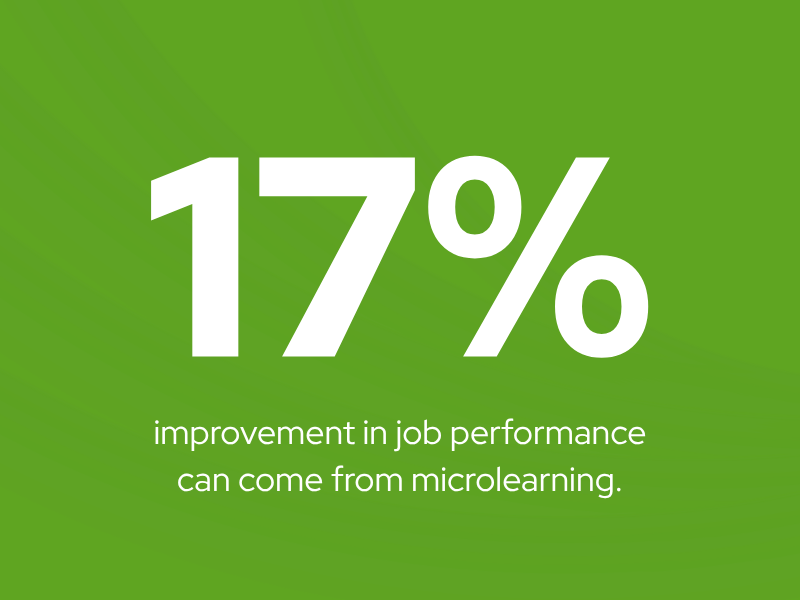
Microlearning’s interactive, bite-sized approach keeps employees engaged and invested in their development, leading to higher job satisfaction and retention. Studies, such as one from the Journal of Applied Psychology, show that microlearning can improve job performance by 17% compared to traditional training methods.
-
Solves Specific Problems Quickly
Microlearning can be tailored to address specific skills or compliance requirements. This targeted approach ensures that employees receive the exact training they need, when they need it, resulting in more effective outcomes.
How a Learning Management System (LMS) Can Support Microlearning
A learning platform is an invaluable tool for implementing microlearning in the workplace. It allows businesses to develop smaller, more focused courses that employees can access anytime, anywhere.
Propelr’s learning platform is specifically designed to support microlearning by offering a range of corporate learning solutions tailored to the needs of modern businesses. Propelr’s learning courses, delivered through the platform’s LMS features, allow organizations to choose from off-the-shelf content or create custom-designed modules that align with their unique requirements.
By leveraging Propelr’s learning platform and courses, companies can seamlessly integrate microlearning into their training strategy, empowering their workforce with the flexibility and adaptability they need to succeed.
Microlearning is not just a trend; it’s necessary for businesses aiming to keep their workforce engaged, informed, and adaptable. By delivering training in manageable, bite-sized pieces, companies can ensure that their employees retain the information they need to excel in their roles while fitting learning into the natural flow of their workday. The result? A more confident, productive, and satisfied workforce that’s ready to tackle any challenge.
Learn more about how microlearning with Propelr’s learning platform can transform your organization’s training strategy.
Nearly 70% of employees say they aren’t fully engaged at work. In an era of remote teams and digital burnout, how do you keep motivation high? One answer: gamification.
What is gamification? According to researcher Karl Kapp, “gamification is an emergent approach to instruction. It facilitates learning and encourages motivation using game elements, mechanics and game-based thinking.” In simple terms, it makes training feel more like a game and less like a chore.
In an LMS, gamification can take many forms. There are a few common game elements used in employee learning and development.
- Points and Badges: Employees earn points for completing tasks and can receive badges for reaching certain milestones.
- Leaderboards: Participants can see how they rank compared to their peers, fostering a sense of competition.
- Challenges and Quests: Training modules can be structured as challenges or quests employees must complete.
- Levels and Progress Bars: Visual progress indicators can motivate employees to continue learning and advancing.
- Rewards and Incentives: Tangible rewards such as certificates can be offered for achieving certain goals.
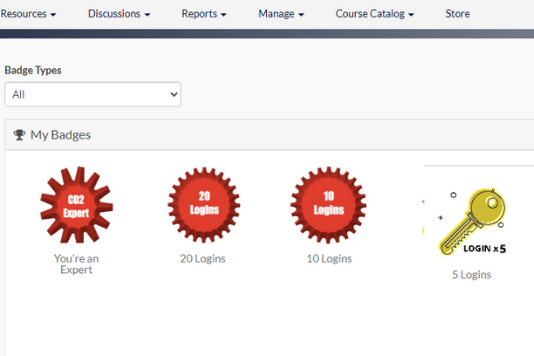
These common game elements make an even stronger impact on employee development when paired with interactive learning content that’s custom-designed for your business. Custom learning content can include interactive modules, engaging simulations, scenario-based exercises, and more.
But why should you incorporate gamification into your employee development program? Let’s explore the top three benefits for your employees and your business.
1) Increase Employee Engagement
Having motivated and engaged employees is essential to a business’s success. With the rise of remote work over the last few years, keeping engagement levels high has become increasingly difficult as existing strategies no longer work. This is where e-learning and gamification come in. Gamification engages employees by activating three core elements of their motivational system: 1) the desire to direct their own life, 2) the desire to be demonstrably effective, and 3) the desire to connect with others.
A study found that 70% of participating employees agreed that gamification helped them feel competent and successful. “Participants in the game design element condition with badges, leaderboards, and performance graphs had significantly higher levels of competence need satisfaction.”
Combining these gamification elements with custom-designed learning modules or interactive scenario-based exercises further enhances engagement and helps employees feel accomplished.
This sense of accomplishment is crucial for maintaining motivation and engagement in the workplace. Another study came to the same conclusion. They stated that “gamification positively predicts workplace thriving, as employees who engage in gamified activities are expected to exhibit higher levels of motivation, engagement, and overall thriving in the workplace.”
2) Improve Knowledge Retention and Performance
Using gamification doesn’t stop at enhancing employee engagement, it also increases knowledge retention and makes employees more likely to apply what they’ve learned. Simply stated, the more engaged an employee feels, the more likely they are to perform better.
Implementing game elements like points and badges into your training program reinforces desired behaviors and positively impacts learning outcomes. Receiving badges or points enhances employees’ personal feelings of success and publicly displays their skills, expertise, and accomplishments to coworkers. This type of reward system is highly motivating and influences employees to continue performing well in the future.
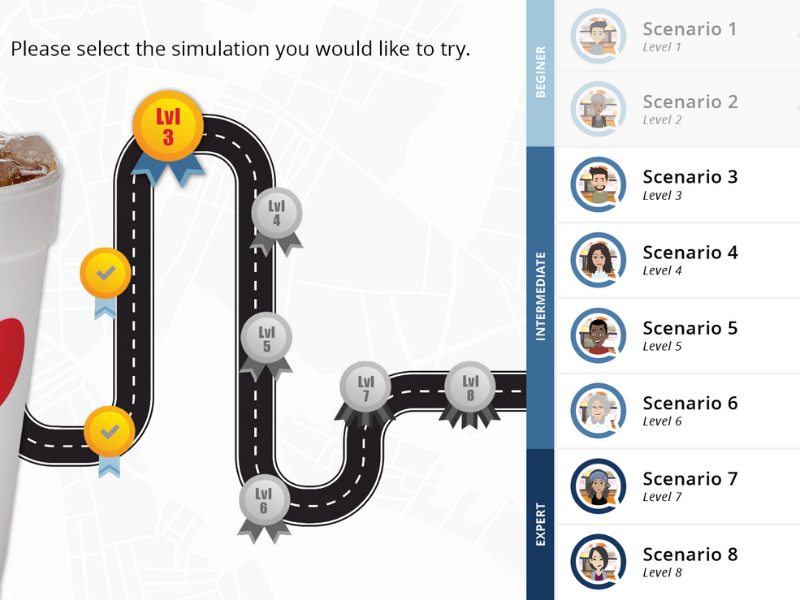
For example, a fully remote software company introduces gamification into its e-learning program. Each time an employee gets a high score on a training module, they receive a badge with labels like “Product Expert,” “Sales Master,” and “Customer Service Guru.” With each badge, employees feel motivated to continue excelling in the future. Publicly displaying the badges on their profiles fosters a spirit of friendly competition and a collaborative atmosphere, encouraging everyone to strive for excellence.
3) Retain More Employees
Employees who feel engaged, motivated, supported, and successful in their roles stick around for the long term. On the contrary, employees who feel disconnected and unsupported are more likely to resign. If this problem becomes widespread, it results in high turnover, which is not great for your business’s bottom line.
Gamification and custom-designed learning content are fantastic tools to improve employee retention and combat turnover. A study on the impacts of gamification on learning and development found that 60% of participants agreed that gamification made them feel like they were part of a team. This sense of belonging contributes to higher job satisfaction and lower turnover rates.
Ultimately, the key to retaining employees is listening and responding to their needs. As this article from Forbes points out, “If workers say they want to be engaged, then engage them. If they want to feel part of a culture, then invest in your culture. If they want training so they can do their job better, then create training that works.”
Building custom, interactive learning content and incorporating gamification into your development program is key to supporting employees in the ways they need most so your business can retain top talent.
At Propelr, we are dedicated to helping businesses create and scale an engaging and impactful e-learning program. Our learning platform includes features and native authoring tools to help you build a custom program suited to your business goals. Gamification is built into our platform, and we’ll partner with you to implement game elements that best meet your employees’ needs.
Ready to boost employee engagement? Let’s build your custom gamified training program.
The Learning Management System Features That Actually Move the Needle
You already know how important effective workplace training is. Whether you’re onboarding new hires, managing compliance training, or ensuring your team has the skills to do great work, your learning and development program has a major impact on employee and business success. In today’s tech-forward landscape, what’s changing is how teams get trained.
These days, a learning management system (LMS), also known as an enterprise learning platform, isn’t just a nice-to-have; it’s central to keeping people informed, aligned, and growing. When you dive into the data, this is clear.
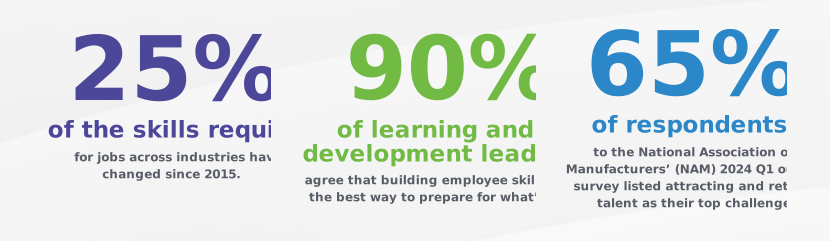
Skills are evolving quickly (about 25% of the skills required for jobs across industries have changed since 2015), and nearly 90% of learning and development leaders agree that building employee skills now is the best way to prepare for what’s next, according to a workplace learning report from LinkedIn.
An effective LMS supports that kind of growth for employees and leaders. It brings structure to onboarding, simplifies compliance, and makes training accessible, whether someone’s on a shop floor, behind a desk, or working remotely.
With talent shortages growing, the stakes are real. Over 65% of respondents to the National Association of Manufacturers’ (NAM) 2024 Q1 outlook survey listed attracting and retaining talent as their top challenge. Deloitte found in a 2023 workforce strategies study that 1.9 million manufacturing jobs (over 50% of total positions in that industry) remain unfilled due to skills gaps.
One way to address skill gaps and boost talent within the workplace is with a modern LMS solution. Here’s how to evaluate what’s available (and what to avoid).
What Should You Look For in a Modern LMS?
There are a lot of platforms out there, and not all of them are built with your day-to-day in mind. If you’re looking for a system that truly supports your team and your goals, here are some non-negotiables:
-
Cross-device compatibility
When employees can complete training from a browser on their phones on breaks, between tasks, or on the go, it removes barriers and makes learning feel natural.
-
Automated assignments and reminders
Admins shouldn’t have to chase people down or manually assign every course. Automation saves time, reduces errors, and keeps training moving without micromanagement.
-
Clear tracking and reporting
A 2025 LinkedIn report found that 49% of companies with successful learning programs use data to identify skill gaps. With real-time visibility, admins can proactively spot gaps, prove compliance, and support teams without digging through spreadsheets.
-
No-code course authoring
HR and training teams can build and update content independently, without waiting on developers. That means faster launches, quicker updates, and more control.
LMS Evaluation Guide At a Glance
| What to Look For | What to Avoid |
|---|---|
| Centralized content management for storing and assigning courses | Disconnected system that doesn’t fit into your organization’s workflows |
| User and role-based access controls for different types of learners | One-size-fits-all content delivery with no customization |
| User-friendly course completion tracking and audit logs to support compliance | Minimal or non-actionable analytics that makes it difficult to prove compliance |
| Intuitive interface with minimal learning curve. | Outdated interface with overly complicated setup requiring extensive training |
| Cross-device compatibility that allows for on-the-go learning | Lack of course accessibility from mobile browsers |
| Transparent pricing with clear terms for scaling and upgrades | Surprise fees for implementation, user caps, or feature access |
| Scalable as your team grows or shifts | Rigid workflows that don’t adapt to your organizations structure |
What Sets a Learning Management System Apart
Some platforms may check all of these boxes but still fall flat when it comes to actual engagement or ease of use. These features tend to drive greater training ROI:
-
Personalized learning paths
When the system adapts to the learner based on their role, skill level, or progress, it creates a more relevant experience and better supports growth.
-
Adaptable to different work environments
Not everyone learns at a desk. Whether someone’s remote, in-office, or working hands-on, training that fits into their real workflow means higher adoption and fewer disruptions to daily work.
-
Scalability
As your team grows or shifts, you shouldn’t need to overhaul your training setup. A scalable LMS keeps things running smoothly whether you support ten employees or ten thousand.
Ultimately, the best enterprise learning platforms are the ones that fit you, not the other way around.
What Should You Avoid in a Learning Platform?
You know what works for your business, but here are a few LMS red flags that could cause problems:
-
Overly complicated system
If you have to read a thick manual to learn how to assign a course, it’s probably not worth your time.
-
Rigid structure
You should be able to tweak your learning paths and content delivery as your needs evolve. If an LMS doesn’t allow for this, it will likely hold you back in the long term.
-
Shallow reporting
Without meaningful insights, it’s hard to close training gaps, prove compliance, or improve your program over time.
-
Surprise costs
Implementation fees, user caps, or upgrade charges can add up quickly. Ask questions about additional costs upfront, so you don’t end up with a system that’s too expensive to scale or too limited to meet your needs over time.
Looking for the Best LMS? Check Out Propelr
While you’re exploring options, check out Propelr’s learning platform.
Here’s our approach:
We built our platform with the goal of making workforce training faster, smarter, and more effective.
-
Custom or off-the-shelf content
Build custom, tailored learning programs, plug in content you already have, or buy pre-built courses.
-
No hidden costs
What you see is what you get. We won’t surprise you with unexpected fees.
-
Human-centered
Our highest priority is providing top-shelf customer support. When you work with Propelr, you aren’t just a customer; you’re a valued partner.
-
AI-supported
Our software helps you create relevant training faster with built-in tools that streamline content building for safety, equipment, and compliance topics.
Propelr is flexible enough for whatever training challenge you’re tackling: onboarding, compliance training, skill-building, customer education, or all of the above. Contact our team to get a live Propelr LMS demo.
The Long-Term Impact of Your LMS Choice
The LMS you choose has long-term implications for how your organization attracts, develops, and retains talent. In an L&D report that addresses how companies thrive amid economic headwinds, LinkedIn found that 29% of employees on average say that opportunities to learn and develop new skills are a top reason they’d consider accepting a new job. And 98% of companies that adopted a skills-based learning approach said they retained top performers, according to a Deloitte report evaluating workforce issues around skill gaps and applicant gaps.
Impacts on recruitment and retention directly impact the bottom line. In a 2025 report, SHRM found that hiring a new employee costs about $4,700. In comparison, most companies invest around $3,000 per person in learning and development. Upskilling doesn’t just build stronger teams; it saves money, improves operations, and future-proofs your workforce. The right LMS is how you get there.
Plot Your Path Forward
At Propelr, we have a learning platform designed to help you train smarter and grow stronger across every role, shift, and location. We’ll help you automate busywork so you can focus on growing your team and your business. Check out the ins and outs of our platform.
What is a Learning Management System?
An LMS is digital, interactive training software that enables businesses like yours to create, deliver, track, and manage workplace education. Whether you’re onboarding new employees, offering compliance training, or providing customer education, an LMS can serve as your centralized hub.
With the constant rise of new technologies and changing business priorities, workplaces are moving faster than ever. When businesses cut through the noise to prioritize learning and development, they see lower turnover, higher productivity, and a more engaged workforce.
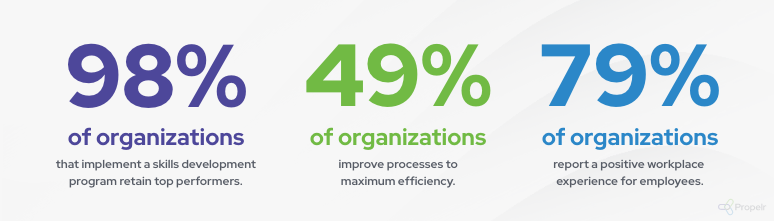
Deloitte found that 98% of organizations that implement a skills development program retain top performers, 49% improve processes to maximum efficiency, and 79% report a positive workplace experience for employees.
Implementing a learning management system (LMS) is one of the most effective ways to elevate your training program. Considering an LMS for your business? We’re here to answer your questions!
1. Who Uses an LMS? HR, Business Owners, and More
Are you a trainer at a manufacturing plant? Or maybe you work in the HR department of a major retailer? Regardless of your role or industry, an LMS can benefit your company. Here’s how:
- For HR leaders, an LMS is a valuable tool for facilitating effective onboarding and ensuring the completion of required compliance training.
- Learning and development managers can use an LMS to upskill employees with ongoing professional development that leverages structured learning paths.
- Training coordinators can streamline logistics, manage training schedules, and monitor learner performance easily in an LMS.
- Small business owners who make an upfront investment in an LMS save time, resources, and money in the long term by providing consistent, scalable training to their employees and customers.
2. What Features Does an LMS Have?
An effective learning management system should simplify and enhance the training experience for leaders and learners. Here are the most popular features HR professionals and learning and development leaders look out for.
- Content Builder: Create learning courses that align with your business needs. Look for an LMS that features no-code course authoring software so you can tailor every learning opportunity without extensive IT knowledge.
- Gamification: Looking for a gamified learning platform? Boost employee engagement with features like badges, leaderboards, and rewards that make learning fun and interactive.
- Artificial Intelligence (AI): Busy leaders can personalize learning paths quickly with an AI-assisted course creator, which you’ll find in some LMSs.
- Analytics and Reporting: Track the impact of learning, identify gaps, and make smarter training decisions with clear, actionable insights generated automatically.
3. How Can Interactive Training Help My Business?
An LMS simplifies training management and delivers measurable benefits for businesses.
Create a Safer Workplace
When employees understand essential regulations and workplace standards, your organization will reduce injuries and lower claims. An effective LMS makes implementing safety and compliance training easy, and built-in progress tracking helps identify gaps and demonstrate compliance to regulators. Ultimately, a safer line leads to more productivity and stable profit margins.
Build Employee Confidence
Set every employee up for success from day one. With an LMS, it’s simple to deliver consistent, comprehensive onboarding to every employee, regardless of role or job location. An effective ramp-up period will lead to more productivity down the road.
Retain More Employees
Employees value professional growth and want to work for a company that supports their development. By offering ongoing learning opportunities through an LMS, you empower your team to develop new skills, stay engaged, and see a clear path for career advancement, reducing turnover in the long term.
Empower Your Customers
An LMS isn’t just for employees. When customers have on-demand access to interactive courses, how-to videos, or product walkthroughs, they’ll learn your products faster, reducing calls to your customer support team and turning them into long-term advocates.
4. What’s the Best LMS for HR and Business Needs?
Different LMS platforms are designed for different purposes. Here are a few things to look out for when shopping for an LMS that meets your needs.
Is a free LMS worth it?
While free LMS platforms can be appealing, especially for small teams or limited budgets, they often come with trade-offs. Free solutions may lack scalability, advanced analytics, integration capabilities, and customer support. For organizations looking to grow or meet complex training needs, a paid LMS often delivers better value in the long run.
Want to see how CBord transformed their training and customer engagement?
Should I Use a Cloud-Based LMS Solution?
When deciding whether to use a cloud-based or on-premise LMS, consider the complexity of your company’s data control needs and the extent of your in-house IT resources.
- Cloud-based learning platforms are hosted online and accessible from anywhere. They offer automatic updates, scalability, lower upfront costs, and require minimal IT involvement. They are often subscription-based and include customer support, security updates, and integration with other HR tools.
- On-premise systems are installed locally on your organization’s servers, giving you complete control over data and security. However, they often require more significant upfront investment, ongoing IT maintenance, and internal resources to manage updates and support.
Find the LMS for You
Choosing the right LMS starts with understanding your goals, audience, and technical needs. Whether you want to train employees, engage customers, or track compliance, there’s a solution out there for you.
Need help finding the right LMS? Take a quick, self-paced tour of Propelr’s learning platform.
In manufacturing, seasonal employees often arrive at the busiest and most critical times of the year. Whether ramping up production for summer demand, filling in for vacationing full-timers, or staffing a new shift, quickly getting new hires trained and productive is essential to keeping operations on track.
Online recruitment and onboarding is a great solution for your seasonal workforce. Forward-thinking manufacturers are using digital pre-assessments and training tools to improve hiring decisions, accelerate onboarding, and reduce costly turnover. This strategy is especially important when every new team member must quickly learn safety procedures, production processes, and quality standards.
Pre-Training That Pays Off
Before a new seasonal hire even sets foot on the floor, online assessments can help you evaluate:
-
Technical Skills
Can this candidate safely and effectively operate the machinery or tools required for the role?
-
Attention to Detail
Critical in high-precision roles or quality assurance.
-
Reliability & Work Ethic
Especially important for seasonal roles that require fast learning and self-motivation.
-
Safety Awareness
A top priority in any industrial setting.
Pre-assessments do more than filter candidates, they set the tone for training. When new hires walk in already familiar with their expectations, safety protocols, and basic job functions, supervisors spend less time backtracking and more time building productivity.
Smarter Interviews, Better Hires
Pre-assessments also provide a great start for the actual interview process. Rather than asking generic questions, you can drill into relevant behaviors, such as how the candidate handles repetitive tasks, pressure, or teamwork on a production line.
Even for seasonal employees, the search for your next “great fit” team member and potential top performer should start well before an actual job offer is even made. And that process begins online.
Let’s Recap
Hiring seasonal workers in manufacturing? Start with:
- Online pre-assessments for technical and behavioral fit.
- Safety and process training before day one.
- A focus on finding your next standout employee early.
Ready to streamline seasonal hiring and training?
Let’s talk. Contact our sales team today.
Let us show you how Propelr can help you hire smarter, train faster, and keep your line running smoothly all season long.
Outcome-Driven Onboarding in Manufacturing
In manufacturing, onboarding seasonal hires means moving fast—without sacrificing precision. Outcome-based training helps you ramp up safely and efficiently during peak production cycles.
Before onboarding begins, identify the key outcomes your seasonal hires must achieve to contribute safely and effectively. Start with your non-negotiables.
- Do they understand the safety protocols required in your facility?
- Can they follow your production process accurately?
- Are they aware of quality assurance expectations and deadlines?
Safety First. Always.
If your team must master lockout/tagout procedures, PPE usage, or machine operation basics, make those your first training priorities. Use digital tools to track completion and comprehension, ensuring everyone is on the same page.
Outcome-based onboarding not only protects your people, but also your bottom line by:
- Minimizing downtime.
- Reducing training waste.
- Lowering compliance risk.
Certify for Confidence
Your outcomes-based learning also offers a potential branded certification program. A solid certification path can result in increased loyalty from staff, mastery of knowledge and skills, and meaningful recognition for future career positions.
Pro Tip:
Revisit critical training at regular intervals. One-and-done training won’t cut it—repetition leads to retention.
Ready to Build Smarter Onboarding Paths?
Let’s build a better training solution for your team.
Discover how Propelr helps manufacturers hire faster, train smarter, and reduce onboarding risk—so your line keeps moving, safely and efficiently.
Train for Independence: Resource Access Matters
Temporary or seasonal workers in manufacturing don’t need to memorize every process or protocol, but they need to know where to find essential information, fast.
Virtual training and onboarding is a great opportunity to incorporate online collaboration or mentoring/coaching programs and to build a robust library of content. With limited onboarding time and high production pressure, your best approach is to make key resources accessible, searchable, and always up to date.
Digital training tools—like mobile-friendly knowledge bases, SOP libraries, or embedded QR codes on the line—can reduce errors and empower seasonal workers to stay productive without constant supervision.
How to Make Resources Available in Manufacturing
During peak season, manufacturers bring on large numbers of temporary workers. One best practice: create a digital “resource library” for each line that’s accessible using tablets and scannable QR codes. New hires could instantly access:
- Machine safety protocols.
- Quick-start videos for specific tools.
- Troubleshooting guides.
- Shift-specific checklists.
These tools prevent information overload and enable confident, independent work from day one.
From Knowledge to Action
Some information—like quality specs or safety reminders—shouldn’t rely on memory. Build cues into your systems and tools. For example:
- Include safety prompts in machine UIs or tablets.
- Post color-coded signage by station.
- Use digital reminders for hourly or shift-change checks.
Pair these with coaching or mentoring programs so seasonal hires know who to ask and where to look when questions arise.
Need Help Creating Smarter Onboarding Tools?
Start your journey with Propelr now.
Learn how Propelr delivers resource-rich training and mobile access to help new and seasonal hires ramp up quickly and confidently.
Onboarding Isn’t One-and-Done
Hiring seasonal workers in manufacturing is only half the battle—keeping them engaged is where retention happens.
Younger workers and first-time hires are understandably nervous but generally excited to take on their seasonal job. Grab their attention and engage them from day one of onboarding, but don’t forget—they have no past on which to base their experience, and when their actual experience doesn’t meet expectations, they will leave.
To avoid early exits, treat onboarding as an ongoing process, not a one-time event. Reinforce expectations, celebrate progress, and provide frequent check-ins to make new team members feel seen, supported, and successful.
Small Actions, Big Impact
High turnover during peak season doesn’t have to be a given. The most successful manufacturers re-engage seasonal employees with consistent, simple touchpoints, like:
- Micro-messages with shift reminders or safety tips.
- Digital check-ins to gather feedback or pulse surveys.
- Peer shout-outs and team recognition boards on the floor.
- Gamified learning modules that reward knowledge application.
These strategies show your seasonal hires; they matter and help them feel like part of the team.
Make Recognition Routine
Recognition doesn’t need to be flashy—it just needs to be regular. In manufacturing, where speed and safety are everything, small shout-outs can go a long way. Try:
- A weekly “Safety Star” spotlight.
- Bonus entries into a team raffle for perfect attendance.
- Name drops in internal newsletters or on break-room boards.
When workers feel seen, they’re more likely to stay and care about doing the job right.
Need Help Turning Training into Engagement?
Tell us what you’re looking for, and we’ll take it from there.
With Propelr, it’s easy to convert what’s working into digital training that keeps seasonal staff engaged and ready to perform.
As we approach the months when some businesses ramp up staffing for the summer, we turned to our experienced online training clients for their most valuable onboarding tips. Clients included a professional sports team, an amusement park, a restaurant, and a warehouse/manufacturing business. Here is one of their top onboarding tips: Simulations!
It’s a fact, the use of online simulations during training leads to increased confidence. Confident employees make less mistakes, have a faster road to productivity, provide a better customer experience, and have more positive interactions with existing team members. Better yet? Onboarding through simulations leads to longer retention!
Simulations are an important component of an LMS platform and when they are adapted for mobile learning, these simulations allow you to optimize your learning content and environment. Simulations pay for themselves.
Taking your existing training and converting it to engaging online training (like simulations) or creating new courses from scratch, is what we do best. Contact us for more information.
As we approach the months when some businesses begin hiring for seasonal staff, we turned to our experienced online training clients for their most valuable onboarding tips. Clients included a professional sports team, an amusement park, a restaurant, and a warehouse/manufacturing business. Online recruitment and onboarding are today’s solutions for your seasonal workforce.
Here are the five important components to get you started:
#1 – Effective training starts before onboarding and before hiring.
Pre-assessments during the recruitment stage are indicators of success. Assess personality, specific skills, emotional intelligence, integrity, and job knowledge. Because the cost of hiring the wrong individual is high, online pre-assessments during the recruitment stage are not only indicators of success, they help the bottom line.
#2 – Prioritize key outcomes.
If every member of the team needs to understand important safety information, then make that priority number one. Ensure mastery and understanding of the knowledge that is most critical for customer and employee safety. Pay close attention to compliance and tracking. Revisit this training at regular intervals.
#3 – Temporary or seasonal workers do not have to know it all, but they need to know where to find the information or resources they may need.
This is a great opportunity to incorporate online collaboration or mentoring/coaching programs, and to build a robust library of content and resources.
#4 – Re-engage.
Young team members and first-time workers are understandably nervous but generally excited to take on their seasonal job. Grab their attention and engage them from day one of onboarding. But don’t forget–they have no past on which to base their experience and if they become disillusioned, they will leave. One Midwestern amusement park reports a 100% turnover by July 4. Use communication and feedback, friendly competitions, gamification/game-based learning, and public rewards and acknowledgements to reinforce your team’s value.
#5 – Simulated learning eases stress and reduces errors.
Allowing for adequate training (better yet if it’s branded or certified training) will benefit your bottom line by producing more accurate and faster employee-client transactions. Simulations are an important component of a learning management system, and when they are adapted for mobile learning, these simulations allow you to optimize your learning content and environment.
Converting your existing training to engaging, online training or creating new courses from scratch is what we do best. Ready to improve your onboarding? Develop updated solutions today—request a demo!
As a new year begins, organizations have the perfect opportunity to reflect and recalibrate their learning strategies. This year, the focus should be on not just conducting a review but diving deep into the effectiveness of your learning initiatives using key metrics. A data-driven approach to evaluating your training programs can reveal invaluable insights and guide strategic decisions. Let’s explore the essential metrics and benchmarks that can help you optimize your learning strategy for maximum impact.
Comprehensive Assessment of Your Learning Environment
Your Learning Management System (LMS) is a treasure trove of data and can serve as the backbone of your analysis. To effectively analyze your learning strategy, start with a holistic assessment of your current training programs. Key metrics to consider include:
-
Completion Rates: This metric indicates the percentage of courses that employees complete. A benchmark of 70-90% is generally good, but you should also consider the complexity and length of the courses. Low completion rates could signal issues with course content, length, or learner engagement.
-
Learner Engagement: Engagement metrics, such as average time spent on courses, participation in interactive elements, and completion of optional activities, provide insight into how engaging your content is. Engagement benchmarks can vary greatly, but consistently high rates are a good sign. If engagement is low, consider incorporating more interactive elements or shortening the course duration.
-
Feedback and Satisfaction Rates: Gathering and analyzing learner feedback is essential for understanding the effectiveness and reception of your training programs. Aim for a satisfaction rate of at least 85%. Regular surveys and feedback mechanisms can help gather this data. Consider qualitative feedback as well, as it can provide deeper insights into the learner experience.
Align Learning With Business Goals
A critical aspect of your strategy should be its alignment with overall business objectives. Incorporate and track current learning trends to keep your strategy relevant and effective.
- Skill Application Rate: Measuring how effectively employees apply new skills in their work is a key indicator of the practical impact of your training. Utilizing surveys, performance evaluations, or direct observations can help measure this, with a target application rate of over 75% being ideal. Consider setting up a mechanism for managers or team leads to provide feedback on their team members’ skill application post-training.
-
ROI on Training: Calculating the return on investment (ROI) in training can be complex, but it is crucial. Consider the following factors: improved productivity, quality of work, reduced error rates, and employee retention. Calculating ROI involves comparing the benefits (quantitative and qualitative) of training against the costs involved. A positive ROI indicates that your training is not only effective but also cost-efficient.
-
Staying Ahead With Emerging Learning Trends: Incorporate and track current learning trends to keep your strategy relevant and effective. Utilize micro-learning strategies and mobile learning engagement for more effective approaches to connect with your employees who are always on-the-go.
-
Creating a Culture of Continuous Improvement: A learning strategy should never be static. Develop a continuous improvement plan by implementing processes for quarterly reviews and feedback loops. By creating this regular review process, you will be able to assess current performance versus your benchmark goals, and be empowered to make incremental changes and improvements to your overall strategy.
Conclusion
Analyzing your learning strategy at the start of the year using key metrics is essential for a robust and effective training program. By focusing on completion rates, learner engagement, assessment scores, satisfaction rates, skill application, and ROI, you gain a comprehensive understanding of your strategy’s effectiveness. Regularly reviewing these metrics, staying attuned to the latest learning trends, and adapting your strategy accordingly will ensure that your learning initiatives remain aligned with your organizational goals and continue to drive success and employee development.
Take the first step toward smarter training—book a demo with our LMS experts!
Rolling out an employee development program for your organization is a big initiative, and requires the support of your company influencers to be successful. These influencers are the top 3-5% of your organization who, despite being a small group, influence close to 40% of the morale and engagement of your total organization.
As digital learning and development professionals, it’s critical to understand why your learning program needs company influencers, how to identify and engage them, and how to measure success. We’ll explore all of these topics in our three-part series in partnership with Performica.
6 Key Strategies
Launching an employee development program for your organization is a major initiative – one which you now see may be more successful if you enlist the help of company influencers. In Part 1 of this 3-part series, we focused on why influencers are important and how to identify them. Now, let’s explore strategies for gaining the support of your company’s influencers for your learning initiative.
It’s clear that company influencers have a vital impact on the ebb and flow of morale and engagement at your company. As you roll out an employee development program, it’s essential that you get these key employees on board with your new learning initiative. As we mentioned previously, it’s important to identify and engage them early in the process because they can be helpful in shaping not only the rollout of your initiative, but the initiative itself.
Here are five key strategies to keep in mind.
1. Build Relationships.
First, start by building relationships with these influencers. Ideally, set up one-on-one meetings with them to make it clear that a relationship with them is your priority. Discuss your learning initiative and how they can use their influence to help with your goals. Ensure that they know you want to add value where you can for them as well, looking for commonalities, and genuinely building a good working relationship with them.
2. Make Influencers Feel Valued.
Make sure you let these influencers know how much you value their contributions to the company. Explain how their involvement can positively impact their colleagues’ professional development, and how their support of the learning initiative can help the company reach its goals.
3. Communicate the Benefits.
Clearly communicate the benefits of the learning initiative, both for the company and for the employees. Provide detailed information about how the initiative can improve employee skills and performance, and how it can lead to better productivity, customer satisfaction, and overall business success. It’s also important that you communicate the benefits to them personally–improving skills, increasing odds for receiving promotions and additional compensation, learning more efficient and effective ways to do their jobs, etc.
4. Provide Incentives.
Consider offering incentives like recognition and rewards to your company influencers for their support of the learning initiative. You could also offer them the opportunity to lead or facilitate some of the learning sessions, or give them a special badge in the LMS as recognition for their support. You may also want to recognize them for completing some of the courses, and promote those as courses they particularly enjoyed to the broader community. This offers the added benefit of encouraging others to enroll in the courses.
5. Involve Them in the Process.
Include these influencers whenever possible in the development of the learning initiative and the rollout plan. Truly listen to their input and incorporate it into your strategy. This can help them feel invested in the initiative – and make them much more likely to champion it to their colleagues. It will also improve your initiative, as they bring a different perspective that can provide a voice to your larger community.
6. Use an LMS to Connect.
A learning management system (LMS), like Propelr’s Learning Management System, can help you collaborate effectively with your company influencers, gather their insights, and enhance your learning initiative. No matter how large your company is, communicating with and capturing valuable feedback from influencers will be simple with this helpful tool.
Using these strategies will help you develop a learning initiative that will speak more directly to your employees than if you hadn’t involved your company influencers. You’ll also have the support of these influencers as you roll out your initiative, increasing the chance that employees will be receptive and interested in engaging with your program. Just remember to continually communicate to your influencers the importance of the initiative and the value of their support throughout the process.
Wondering how you’ll be able to measure the success of your learning program with company influencers? Stay tuned. We’ll cover that in Part 3 .
Rolling out an employee development program for your organization is a big initiative, and requires the support of your company influencers to be successful. These influencers are the top 3-5% of your organization who, despite being a small group, influence close to 40% of the morale and engagement of your total organization.
As digital learning and development professionals, it’s critical to understand why your learning program needs company influencers, how to identify and engage them, and how to measure success. We’ll explore all of these topics in our three-part series in partnership with Performica.
4 Methods to Measure Success
Enlisting the assistance of company influencers to help shape and roll out a learning program for your organization can boost its chances of success. As digital learning and development professionals, you’ll want to know how to measure that success–and your influencers can again help with that. In this final part of our three-part series, we’ll explore just that.
Now that you’ve identified and onboarded your company influencers, it’s time to measure the success of your learning program.
1. Ask influencers.
One way to measure success is by collecting feedback and data from these influencers. Ask them about their experience with the program, how it’s impacted their work and productivity – and if they would recommend it to others. This feedback can provide valuable insights into the program’s effectiveness and areas for improvement.
2. Engagement metrics.
Another way to measure success is by looking at the overall engagement and participation levels across the organization. With the company influencers on board, you should see a higher level of engagement and participation in the learning program. This can be measured through completion rates, attendance at training sessions, and feedback from managers on their team members’ development.
3. Business outcomes.
It’s also important to track any business outcomes that may have resulted from the learning program. This can include improvements in productivity, sales, customer satisfaction, and employee retention. By linking the learning program to tangible business outcomes, you can demonstrate the value of the program and justify future investments.
4. Employee career growth.
Lastly, don’t forget to track the impact on employee development and career growth. Are employees who participated in the learning program demonstrating new skills and competencies? Are they being promoted or taking on new responsibilities? These are important indicators of the learning program’s success in helping employees grow and develop their careers.
In summary, measuring the success of your learning program with company influencers is crucial to understanding its effectiveness and impact on the organization. By collecting feedback, tracking engagement levels, linking to business outcomes, and monitoring employee development, you can ensure that your learning program is achieving its goals and delivering value to the organization.
Rolling out an employee development program for your organization is a big initiative, and requires the support of your company influencers to be successful. These influencers are the top 3-5% of your organization who, despite being a small group, influence close to 40% of the morale and engagement of your total organization.
As digital learning and development professionals, it’s critical to understand why your learning program needs company influencers, how to identify and engage them, and how to measure success. We’ll explore all of these topics in our three-part series in partnership with Performica.
Understanding the Role of Company Influencers in Learning Programs
Company influencers are individuals who are well-respected, admired, and have a significant influence on their peers. By enlisting these influencers as allies, you can increase the reach and impact of your learning and development (L&D) programs, making them more effective in achieving your organization’s goals.
Boosting Employee Learning and Engagement With Help From Company Influencers
When it comes to rolling out a new learning initiative in your organization it’s important to remember that it’s not just about the initiative itself–it’s also about how you get your employees engaged and invested in the program. One key factor in that equation is your company influencers.
The reason these influencers are so important to your learning program is that they can create momentum and excitement around the program, which is critical to its success. When these influencers are excited about the learning program, actively participating, and encouraging others to participate, it creates a “ripple effect” that leads to broader engagement across the organization.
Research shows that employees who feel their managers are supportive of their learning and development are more engaged and motivated at work. In fact, a survey by LinkedIn Learning found that 94% of employees would stay at a company longer if it invested in their learning and development.
When your company influencers are on board with your learning initiative, it sends a clear message to the rest of the organization that this is an important priority for the company as a whole. This is especially true when many of those influencers are in leadership–and they often are. The support of company influencers can help to create a culture of learning within the organization, where continuous development is valued and encouraged. By enlisting these influential colleagues as advocates for your learning program, you also create a more motivated, engaged, and invested workforce–and that’s a win for everyone involved.
So, how can you get your company influencers on board with your learning program? We’ll dive into that in Part 2 of this series, but one key takeaway here is that it’s important to identify these influencers early on in the planning process, and to engage with them directly and strategically as you roll out the program.
Identifying the Top 3-5% of Company Influencers
The most critical step in leveraging company influencers for your learning initiative (or anything else) is identifying them either manually or using technology like Performica. You’ll want to ensure you identify both the influencers who are good at self-promotion and those who are stealth influencers. Stealth influencers are those employees whose colleagues come to them for information because they are known for being great employees. Leadership often may be unaware these individuals are influencers because they are quieter, less obvious choices for leaders, and may be from diverse backgrounds or areas of the company.
These influencers are the employees who have the power to influence the decisions and actions of others within the company, as their morale and engagement correlates with about half of the organization’s network. These influencers may be executives, managers, high-performing employees, or even new hires who have already made an impact.
Manually identifying influencers can be a tedious process, but it allows you to understand their impact on the company culture, work ethics, and overall performance. Talk to employees and colleagues to get insights into who has the most influence and who inspires others to do better. Assess their behaviors, attitudes, and work ethics to find out what makes them stand out.
Technology-based influencer identification tools like Performica use data analytics to assess communication and collaboration tools to identify 100% of your influencers with minimal effort, combining passive digital trace data with survey data to truly understand working relationships.
Identifying company influencers is a crucial first step in gaining their support for your learning initiative, whether you find these individuals manually or using technology. By getting your company’s influencers on board with your new learning program, the odds of program success go way up, and the new program is received much more positively by your community. We’ll explore strategies for gaining the support of company influencers in Part 2 of this series.
Corporate training is no longer just about ticking boxes. Organizations need training solutions that equip employees with the skills to stay competitive and ensure customers can maximize the value of the products they use. To meet these demands, companies need adaptable and innovative learning solutions.
Propelr bridges this gap, offering a platform that supports both employee training and customer education. This unified approach helps organizations foster deeper engagement, drive performance, and support long-term development.
Breaking Down the Silos
Traditionally, employee training and customer education have been managed separately. However, forward-thinking organizations recognize the need for consistency across all learning experiences. Propelr integrates both internal and external learning, offering a cohesive platform for onboarding, compliance, professional development, and customer education.
By streamlining these functions, organizations can offer personalized, role-specific content for all learners, whether it’s a new hire or a long-standing customer.
Personalizing the Learning Experience
Learners today expect tailored experiences that align with their goals. Propelr allows organizations to customize learning paths based on individual roles, needs, and preferences. This personalized approach ensures that both employees and customers receive relevant, engaging content that supports their growth.
For companies, this personalization helps boost engagement and loyalty, keeping learners invested in their journey.
Boosting Engagement with Gamification
Gamification is changing how organizations approach learning. Propelr incorporates badging systems and progress tracking to motivate learners through visible achievements. This gamified approach encourages continuous learning, giving users tangible goals that keep them engaged, whether they’re gaining new skills or deepening product knowledge.
Data-Driven Learning for Continuous Improvement
Learning isn’t just about content delivery—it’s about measuring impact. Propelr offers automated real-time analytics that provide insights into learner engagement and course performance. These data-driven insights allow organizations to make informed decisions, identify learning gaps, and continuously improve their training programs.
Creating a Culture of Continuous Learning
The future of corporate training is lifelong learning. As organizations adapt to new challenges, they need flexible, scalable solutions to support ongoing growth. Propelr is designed to foster a culture of learning, empowering businesses to stay agile and keep pace with change.
Redefining Corporate Learning
Propelr is not just a solution provider—it’s a thought leader in the evolving world of corporate learning. As companies face increasingly complex demands from both their workforce and customers, the ability to offer flexible, personalized, and data-driven learning solutions will be key to success. The shift from rigid, one-size-fits-all training programs to adaptable, learner-centric approaches is already transforming the way businesses operate.
Corporate training is no longer about checking a box. It’s about creating meaningful learning experiences that engage and develop employees while empowering customers to maximize their potential. Propelr is at the forefront of this transformation, helping businesses build a more connected, knowledgeable, and future-ready workforce.
Discover how personalized learning with Propelr can transform your training strategy and boost engagement across your organization.