How Modern Compliance Training Strengthens Manufacturing Teams

For manufacturers, compliance isn’t optional. It’s essential. Regulations shift constantly, and missed requirements can mean costly downtime, fines, or safety risks. According to Thomson Reuters’ 2023 Risk & Compliance Survey Report, staying on top of upcoming regulatory and legislative changes is a top strategic priority for many organizations. Navigating these changes effectively not only ensures compliance but also helps your team build and retain the skills they need to stay safe and productive.
By leveraging technology-driven compliance tools, manufacturing teams can reduce risks, eliminate inefficiencies caused by outdated processes, and streamline training efforts. Let’s explore how compliance and skill-building work together to benefit your workforce.
Why Compliance and Skill-Building Go Hand-in-Hand
Modern compliance training isn’t just about meeting regulations—it’s also an opportunity to enhance workforce skills. Keeping necessary certifications and following safety requirements requires a system that is efficient, organized, and easily accessible for frequent updates.
Compliance training does more than ensure your team is following the rules. It also provides more efficient ways for your team members to complete their work, enhance safety practices, and foster collaboration for a safer, more compliant workplace.
By leveraging an integrated technological solution, you can combine compliance and comprehensive training into one platform. Offer training that teaches your team policies such as the ISO 9001 while training them on your products and best practices for managing them.
Benefits of Modernizing Compliance Training
Adopting a modern, technology-driven approach to compliance training offers numerous benefits, from boosting team efficiency to streamlining processes for added convenience. Here are three key advantages of modern compliance training technology:
- Increased Efficiency: Make it simple for your employees to learn, train, and get their necessary certifications, keeping your whole team current and compliant in less time.
- Improved Accuracy: Minimize reporting errors and simplify compliance training with all the right tools in one place.
- Audit Preparedness: Stay ready for regulatory reviews with reliable and up-to-date data.
Managing compliance doesn’t have to be complicated. With one solution that tackles all your challenges, you can simplify processes, improve efficiency, and build a safer, better-managed workplace for your team.
How Propelr Learning can Support Your Manufacturing Team
Propelr Learning Platform is designed to simplify compliance processes while empowering HR and compliance managers to focus more on building your team’s workplace skills. Experience key features such as:
- Automated Compliance Tracking: Eliminate the need for manual spreadsheets and paperwork. With automated tracking, you can ensure consistent monitoring of compliance requirements while reducing the risk of human errors. Make it simple for your employees to learn, train, and get their necessary certifications, keeping your whole team current and compliant in less time.
- Safety Certification Management: Keeping employee certifications current is critical. The Propelr platform makes it easy to manage certifications, send reminders, and ensure compliance deadlines are met.
- Real-Time Reporting: Instantly access accurate data to stay prepared for audits and make informed decisions. Real-time insights help you track progress and identify gaps in compliance or training efforts.
With Propelr Learning Platform, you can not only streamline administrative tasks but also ensure your workforce remains audit-ready and equipped with the skills you need to thrive.
Ready to simplify compliance and build workforce skills? Discover how the Propelr Learning Platform can transform your team’s compliance training today.
In today’s fast-paced corporate environment, keeping employees engaged and ensuring they retain essential training material is a significant challenge. Traditional learning methods, with their lengthy modules and extensive training sessions, often fail to meet the needs of modern professionals who juggle multiple tasks throughout their workday.
Enter microlearning—a game-changing approach that delivers bite-sized, easily digestible training modules tailored to the needs of busy professionals.
What is Microlearning?
Microlearning is a training method that breaks down information into small, focused chunks, typically delivered in short lessons of 5-10 minutes. Unlike traditional training sessions that can be overwhelming and hard to retain, microlearning is easy to digest, understand, and apply immediately. This approach caters perfectly to the modern workforce, where time is at a premium and attention spans are stretched thin.
The Forgetting Curve: Why Traditional Learning Falls Short
Research shows that people forget up to 70% of new information within 24 hours of a traditional training session. This phenomenon, known as the “forgetting curve,” highlights the inefficiency of long-form training in today’s workplace.
Employees are often unable to recall or apply what they’ve learned, leading to wasted time and resources. Microlearning addresses this issue by offering training in small bursts, which makes it easier for employees to retain and apply new information in real time.
Five Reasons Microlearning Is Beneficial for Businesses
-
Easier to Produce
Microlearning modules are quicker to create and update compared to traditional training programs. This flexibility allows businesses to respond rapidly to changing industry trends or company needs.
-
Fits Into the Workday
Employees can complete microlearning sessions during short breaks, eliminating the need for them to step away from their tasks for extended periods. This integration into the flow of work ensures continuous learning without disrupting productivity.
-
Keeps Pace With Emerging Trends
With the rapid pace of technological advancements and industry changes, businesses need to update training content frequently. Microlearning allows for faster content updates, ensuring that employees are always equipped with the latest knowledge.
-
Boosts Employee Retention and Engagement
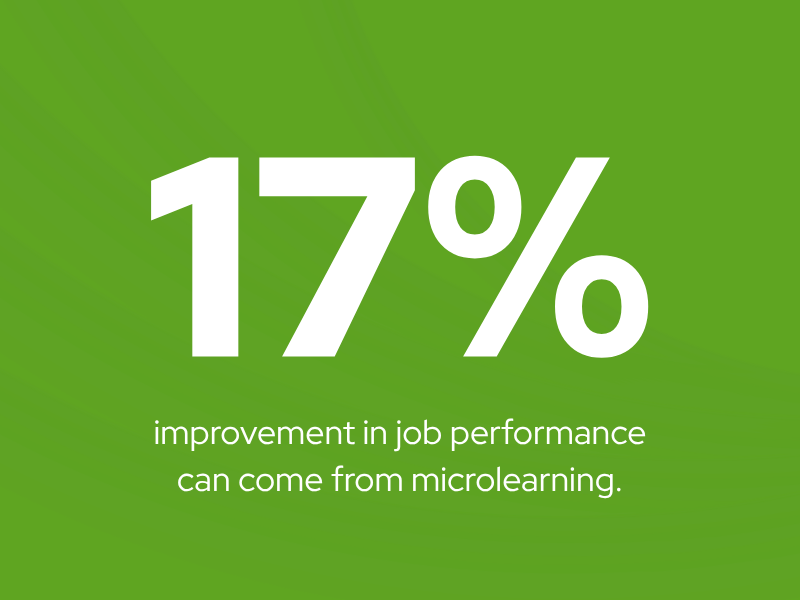
Microlearning’s interactive, bite-sized approach keeps employees engaged and invested in their development, leading to higher job satisfaction and retention. Studies, such as one from the Journal of Applied Psychology, show that microlearning can improve job performance by 17% compared to traditional training methods.
-
Solves Specific Problems Quickly
Microlearning can be tailored to address specific skills or compliance requirements. This targeted approach ensures that employees receive the exact training they need, when they need it, resulting in more effective outcomes.
How a Learning Management System (LMS) Can Support Microlearning
A learning platform is an invaluable tool for implementing microlearning in the workplace. It allows businesses to develop smaller, more focused courses that employees can access anytime, anywhere.
Propelr’s learning platform is specifically designed to support microlearning by offering a range of corporate learning solutions tailored to the needs of modern businesses. Propelr’s learning courses, delivered through the platform’s LMS features, allow organizations to choose from off-the-shelf content or create custom-designed modules that align with their unique requirements.
By leveraging Propelr’s learning platform and courses, companies can seamlessly integrate microlearning into their training strategy, empowering their workforce with the flexibility and adaptability they need to succeed.
Microlearning is not just a trend; it’s necessary for businesses aiming to keep their workforce engaged, informed, and adaptable. By delivering training in manageable, bite-sized pieces, companies can ensure that their employees retain the information they need to excel in their roles while fitting learning into the natural flow of their workday. The result? A more confident, productive, and satisfied workforce that’s ready to tackle any challenge.
Learn more about how microlearning with Propelr’s learning platform can transform your organization’s training strategy.
Nearly 70% of employees say they aren’t fully engaged at work. In an era of remote teams and digital burnout, how do you keep motivation high? One answer: gamification.
What is gamification? According to researcher Karl Kapp, “gamification is an emergent approach to instruction. It facilitates learning and encourages motivation using game elements, mechanics and game-based thinking.” In simple terms, it makes training feel more like a game and less like a chore.
In an LMS, gamification can take many forms. There are a few common game elements used in employee learning and development.
- Points and Badges: Employees earn points for completing tasks and can receive badges for reaching certain milestones.
- Leaderboards: Participants can see how they rank compared to their peers, fostering a sense of competition.
- Challenges and Quests: Training modules can be structured as challenges or quests employees must complete.
- Levels and Progress Bars: Visual progress indicators can motivate employees to continue learning and advancing.
- Rewards and Incentives: Tangible rewards such as certificates can be offered for achieving certain goals.
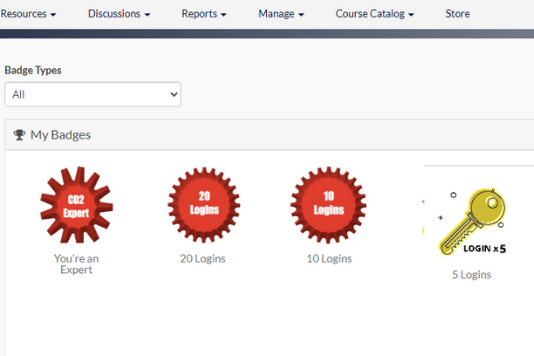
These common game elements make an even stronger impact on employee development when paired with interactive learning content that’s custom-designed for your business. Custom learning content can include interactive modules, engaging simulations, scenario-based exercises, and more.
But why should you incorporate gamification into your employee development program? Let’s explore the top three benefits for your employees and your business.
1) Increase Employee Engagement
Having motivated and engaged employees is essential to a business’s success. With the rise of remote work over the last few years, keeping engagement levels high has become increasingly difficult as existing strategies no longer work. This is where e-learning and gamification come in. Gamification engages employees by activating three core elements of their motivational system: 1) the desire to direct their own life, 2) the desire to be demonstrably effective, and 3) the desire to connect with others.
A study found that 70% of participating employees agreed that gamification helped them feel competent and successful. “Participants in the game design element condition with badges, leaderboards, and performance graphs had significantly higher levels of competence need satisfaction.”
Combining these gamification elements with custom-designed learning modules or interactive scenario-based exercises further enhances engagement and helps employees feel accomplished.
This sense of accomplishment is crucial for maintaining motivation and engagement in the workplace. Another study came to the same conclusion. They stated that “gamification positively predicts workplace thriving, as employees who engage in gamified activities are expected to exhibit higher levels of motivation, engagement, and overall thriving in the workplace.”
2) Improve Knowledge Retention and Performance
Using gamification doesn’t stop at enhancing employee engagement, it also increases knowledge retention and makes employees more likely to apply what they’ve learned. Simply stated, the more engaged an employee feels, the more likely they are to perform better.
Implementing game elements like points and badges into your training program reinforces desired behaviors and positively impacts learning outcomes. Receiving badges or points enhances employees’ personal feelings of success and publicly displays their skills, expertise, and accomplishments to coworkers. This type of reward system is highly motivating and influences employees to continue performing well in the future.
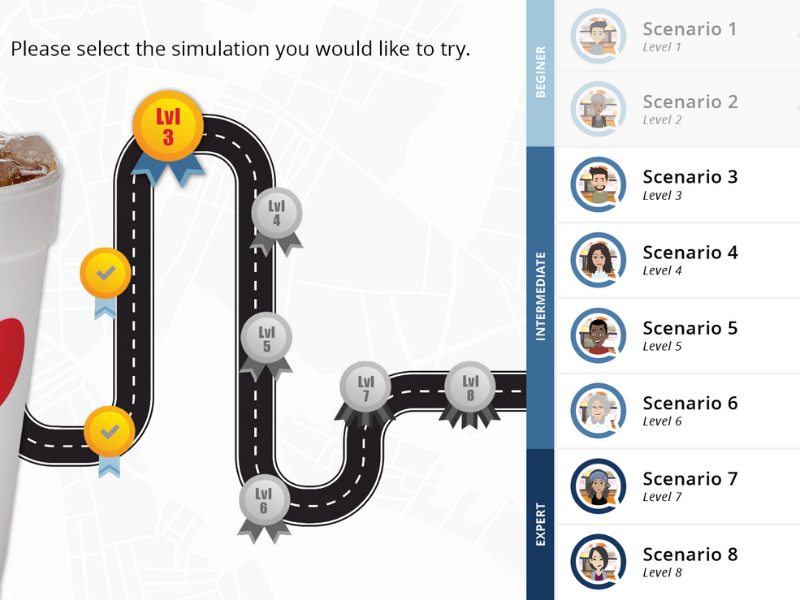
For example, a fully remote software company introduces gamification into its e-learning program. Each time an employee gets a high score on a training module, they receive a badge with labels like “Product Expert,” “Sales Master,” and “Customer Service Guru.” With each badge, employees feel motivated to continue excelling in the future. Publicly displaying the badges on their profiles fosters a spirit of friendly competition and a collaborative atmosphere, encouraging everyone to strive for excellence.
3) Retain More Employees
Employees who feel engaged, motivated, supported, and successful in their roles stick around for the long term. On the contrary, employees who feel disconnected and unsupported are more likely to resign. If this problem becomes widespread, it results in high turnover, which is not great for your business’s bottom line.
Gamification and custom-designed learning content are fantastic tools to improve employee retention and combat turnover. A study on the impacts of gamification on learning and development found that 60% of participants agreed that gamification made them feel like they were part of a team. This sense of belonging contributes to higher job satisfaction and lower turnover rates.
Ultimately, the key to retaining employees is listening and responding to their needs. As this article from Forbes points out, “If workers say they want to be engaged, then engage them. If they want to feel part of a culture, then invest in your culture. If they want training so they can do their job better, then create training that works.”
Building custom, interactive learning content and incorporating gamification into your development program is key to supporting employees in the ways they need most so your business can retain top talent.
At Propelr, we are dedicated to helping businesses create and scale an engaging and impactful e-learning program. Our learning platform includes features and native authoring tools to help you build a custom program suited to your business goals. Gamification is built into our platform, and we’ll partner with you to implement game elements that best meet your employees’ needs.
Ready to boost employee engagement? Let’s build your custom gamified training program.
In manufacturing, seasonal employees often arrive at the busiest and most critical times of the year. Whether ramping up production for summer demand, filling in for vacationing full-timers, or staffing a new shift, quickly getting new hires trained and productive is essential to keeping operations on track.
Online recruitment and onboarding is a great solution for your seasonal workforce. Forward-thinking manufacturers are using digital pre-assessments and training tools to improve hiring decisions, accelerate onboarding, and reduce costly turnover. This strategy is especially important when every new team member must quickly learn safety procedures, production processes, and quality standards.
Pre-Training That Pays Off
Before a new seasonal hire even sets foot on the floor, online assessments can help you evaluate:
-
Technical Skills
Can this candidate safely and effectively operate the machinery or tools required for the role?
-
Attention to Detail
Critical in high-precision roles or quality assurance.
-
Reliability & Work Ethic
Especially important for seasonal roles that require fast learning and self-motivation.
-
Safety Awareness
A top priority in any industrial setting.
Pre-assessments do more than filter candidates, they set the tone for training. When new hires walk in already familiar with their expectations, safety protocols, and basic job functions, supervisors spend less time backtracking and more time building productivity.
Smarter Interviews, Better Hires
Pre-assessments also provide a great start for the actual interview process. Rather than asking generic questions, you can drill into relevant behaviors, such as how the candidate handles repetitive tasks, pressure, or teamwork on a production line.
Even for seasonal employees, the search for your next “great fit” team member and potential top performer should start well before an actual job offer is even made. And that process begins online.
Let’s Recap
Hiring seasonal workers in manufacturing? Start with:
- Online pre-assessments for technical and behavioral fit.
- Safety and process training before day one.
- A focus on finding your next standout employee early.
Ready to streamline seasonal hiring and training?
Let’s talk. Contact our sales team today.
Let us show you how Propelr can help you hire smarter, train faster, and keep your line running smoothly all season long.
Outcome-Driven Onboarding in Manufacturing
In manufacturing, onboarding seasonal hires means moving fast—without sacrificing precision. Outcome-based training helps you ramp up safely and efficiently during peak production cycles.
Before onboarding begins, identify the key outcomes your seasonal hires must achieve to contribute safely and effectively. Start with your non-negotiables.
- Do they understand the safety protocols required in your facility?
- Can they follow your production process accurately?
- Are they aware of quality assurance expectations and deadlines?
Safety First. Always.
If your team must master lockout/tagout procedures, PPE usage, or machine operation basics, make those your first training priorities. Use digital tools to track completion and comprehension, ensuring everyone is on the same page.
Outcome-based onboarding not only protects your people, but also your bottom line by:
- Minimizing downtime.
- Reducing training waste.
- Lowering compliance risk.
Certify for Confidence
Your outcomes-based learning also offers a potential branded certification program. A solid certification path can result in increased loyalty from staff, mastery of knowledge and skills, and meaningful recognition for future career positions.
Pro Tip:
Revisit critical training at regular intervals. One-and-done training won’t cut it—repetition leads to retention.
Ready to Build Smarter Onboarding Paths?
Let’s build a better training solution for your team.
Discover how Propelr helps manufacturers hire faster, train smarter, and reduce onboarding risk—so your line keeps moving, safely and efficiently.
Train for Independence: Resource Access Matters
Temporary or seasonal workers in manufacturing don’t need to memorize every process or protocol, but they need to know where to find essential information, fast.
Virtual training and onboarding is a great opportunity to incorporate online collaboration or mentoring/coaching programs and to build a robust library of content. With limited onboarding time and high production pressure, your best approach is to make key resources accessible, searchable, and always up to date.
Digital training tools—like mobile-friendly knowledge bases, SOP libraries, or embedded QR codes on the line—can reduce errors and empower seasonal workers to stay productive without constant supervision.
How to Make Resources Available in Manufacturing
During peak season, manufacturers bring on large numbers of temporary workers. One best practice: create a digital “resource library” for each line that’s accessible using tablets and scannable QR codes. New hires could instantly access:
- Machine safety protocols.
- Quick-start videos for specific tools.
- Troubleshooting guides.
- Shift-specific checklists.
These tools prevent information overload and enable confident, independent work from day one.
From Knowledge to Action
Some information—like quality specs or safety reminders—shouldn’t rely on memory. Build cues into your systems and tools. For example:
- Include safety prompts in machine UIs or tablets.
- Post color-coded signage by station.
- Use digital reminders for hourly or shift-change checks.
Pair these with coaching or mentoring programs so seasonal hires know who to ask and where to look when questions arise.
Need Help Creating Smarter Onboarding Tools?
Start your journey with Propelr now.
Learn how Propelr delivers resource-rich training and mobile access to help new and seasonal hires ramp up quickly and confidently.
Onboarding Isn’t One-and-Done
Hiring seasonal workers in manufacturing is only half the battle—keeping them engaged is where retention happens.
Younger workers and first-time hires are understandably nervous but generally excited to take on their seasonal job. Grab their attention and engage them from day one of onboarding, but don’t forget—they have no past on which to base their experience, and when their actual experience doesn’t meet expectations, they will leave.
To avoid early exits, treat onboarding as an ongoing process, not a one-time event. Reinforce expectations, celebrate progress, and provide frequent check-ins to make new team members feel seen, supported, and successful.
Small Actions, Big Impact
High turnover during peak season doesn’t have to be a given. The most successful manufacturers re-engage seasonal employees with consistent, simple touchpoints, like:
- Micro-messages with shift reminders or safety tips.
- Digital check-ins to gather feedback or pulse surveys.
- Peer shout-outs and team recognition boards on the floor.
- Gamified learning modules that reward knowledge application.
These strategies show your seasonal hires; they matter and help them feel like part of the team.
Make Recognition Routine
Recognition doesn’t need to be flashy—it just needs to be regular. In manufacturing, where speed and safety are everything, small shout-outs can go a long way. Try:
- A weekly “Safety Star” spotlight.
- Bonus entries into a team raffle for perfect attendance.
- Name drops in internal newsletters or on break-room boards.
When workers feel seen, they’re more likely to stay and care about doing the job right.
Need Help Turning Training into Engagement?
Tell us what you’re looking for, and we’ll take it from there.
With Propelr, it’s easy to convert what’s working into digital training that keeps seasonal staff engaged and ready to perform.
As we approach the months when some businesses ramp up staffing for the summer, we turned to our experienced online training clients for their most valuable onboarding tips. Clients included a professional sports team, an amusement park, a restaurant, and a warehouse/manufacturing business. Here is one of their top onboarding tips: Simulations!
It’s a fact, the use of online simulations during training leads to increased confidence. Confident employees make less mistakes, have a faster road to productivity, provide a better customer experience, and have more positive interactions with existing team members. Better yet? Onboarding through simulations leads to longer retention!
Simulations are an important component of an LMS platform and when they are adapted for mobile learning, these simulations allow you to optimize your learning content and environment. Simulations pay for themselves.
Taking your existing training and converting it to engaging online training (like simulations) or creating new courses from scratch, is what we do best. Contact us for more information.
As we approach the months when some businesses begin hiring for seasonal staff, we turned to our experienced online training clients for their most valuable onboarding tips. Clients included a professional sports team, an amusement park, a restaurant, and a warehouse/manufacturing business. Online recruitment and onboarding are today’s solutions for your seasonal workforce.
Here are the five important components to get you started:
#1 – Effective training starts before onboarding and before hiring.
Pre-assessments during the recruitment stage are indicators of success. Assess personality, specific skills, emotional intelligence, integrity, and job knowledge. Because the cost of hiring the wrong individual is high, online pre-assessments during the recruitment stage are not only indicators of success, they help the bottom line.
#2 – Prioritize key outcomes.
If every member of the team needs to understand important safety information, then make that priority number one. Ensure mastery and understanding of the knowledge that is most critical for customer and employee safety. Pay close attention to compliance and tracking. Revisit this training at regular intervals.
#3 – Temporary or seasonal workers do not have to know it all, but they need to know where to find the information or resources they may need.
This is a great opportunity to incorporate online collaboration or mentoring/coaching programs, and to build a robust library of content and resources.
#4 – Re-engage.
Young team members and first-time workers are understandably nervous but generally excited to take on their seasonal job. Grab their attention and engage them from day one of onboarding. But don’t forget–they have no past on which to base their experience and if they become disillusioned, they will leave. One Midwestern amusement park reports a 100% turnover by July 4. Use communication and feedback, friendly competitions, gamification/game-based learning, and public rewards and acknowledgements to reinforce your team’s value.
#5 – Simulated learning eases stress and reduces errors.
Allowing for adequate training (better yet if it’s branded or certified training) will benefit your bottom line by producing more accurate and faster employee-client transactions. Simulations are an important component of a learning management system, and when they are adapted for mobile learning, these simulations allow you to optimize your learning content and environment.
Converting your existing training to engaging, online training or creating new courses from scratch is what we do best. Ready to improve your onboarding? Develop updated solutions today—request a demo!
As a new year begins, organizations have the perfect opportunity to reflect and recalibrate their learning strategies. This year, the focus should be on not just conducting a review but diving deep into the effectiveness of your learning initiatives using key metrics. A data-driven approach to evaluating your training programs can reveal invaluable insights and guide strategic decisions. Let’s explore the essential metrics and benchmarks that can help you optimize your learning strategy for maximum impact.
Comprehensive Assessment of Your Learning Environment
Your Learning Management System (LMS) is a treasure trove of data and can serve as the backbone of your analysis. To effectively analyze your learning strategy, start with a holistic assessment of your current training programs. Key metrics to consider include:
-
Completion Rates: This metric indicates the percentage of courses that employees complete. A benchmark of 70-90% is generally good, but you should also consider the complexity and length of the courses. Low completion rates could signal issues with course content, length, or learner engagement.
-
Learner Engagement: Engagement metrics, such as average time spent on courses, participation in interactive elements, and completion of optional activities, provide insight into how engaging your content is. Engagement benchmarks can vary greatly, but consistently high rates are a good sign. If engagement is low, consider incorporating more interactive elements or shortening the course duration.
-
Feedback and Satisfaction Rates: Gathering and analyzing learner feedback is essential for understanding the effectiveness and reception of your training programs. Aim for a satisfaction rate of at least 85%. Regular surveys and feedback mechanisms can help gather this data. Consider qualitative feedback as well, as it can provide deeper insights into the learner experience.
Align Learning With Business Goals
A critical aspect of your strategy should be its alignment with overall business objectives. Incorporate and track current learning trends to keep your strategy relevant and effective.
- Skill Application Rate: Measuring how effectively employees apply new skills in their work is a key indicator of the practical impact of your training. Utilizing surveys, performance evaluations, or direct observations can help measure this, with a target application rate of over 75% being ideal. Consider setting up a mechanism for managers or team leads to provide feedback on their team members’ skill application post-training.
-
ROI on Training: Calculating the return on investment (ROI) in training can be complex, but it is crucial. Consider the following factors: improved productivity, quality of work, reduced error rates, and employee retention. Calculating ROI involves comparing the benefits (quantitative and qualitative) of training against the costs involved. A positive ROI indicates that your training is not only effective but also cost-efficient.
-
Staying Ahead With Emerging Learning Trends: Incorporate and track current learning trends to keep your strategy relevant and effective. Utilize micro-learning strategies and mobile learning engagement for more effective approaches to connect with your employees who are always on-the-go.
-
Creating a Culture of Continuous Improvement: A learning strategy should never be static. Develop a continuous improvement plan by implementing processes for quarterly reviews and feedback loops. By creating this regular review process, you will be able to assess current performance versus your benchmark goals, and be empowered to make incremental changes and improvements to your overall strategy.
Conclusion
Analyzing your learning strategy at the start of the year using key metrics is essential for a robust and effective training program. By focusing on completion rates, learner engagement, assessment scores, satisfaction rates, skill application, and ROI, you gain a comprehensive understanding of your strategy’s effectiveness. Regularly reviewing these metrics, staying attuned to the latest learning trends, and adapting your strategy accordingly will ensure that your learning initiatives remain aligned with your organizational goals and continue to drive success and employee development.
Take the first step toward smarter training—book a demo with our LMS experts!
Rolling out an employee development program for your organization is a big initiative, and requires the support of your company influencers to be successful. These influencers are the top 3-5% of your organization who, despite being a small group, influence close to 40% of the morale and engagement of your total organization.
As digital learning and development professionals, it’s critical to understand why your learning program needs company influencers, how to identify and engage them, and how to measure success. We’ll explore all of these topics in our three-part series in partnership with Performica.
6 Key Strategies
Launching an employee development program for your organization is a major initiative – one which you now see may be more successful if you enlist the help of company influencers. In Part 1 of this 3-part series, we focused on why influencers are important and how to identify them. Now, let’s explore strategies for gaining the support of your company’s influencers for your learning initiative.
It’s clear that company influencers have a vital impact on the ebb and flow of morale and engagement at your company. As you roll out an employee development program, it’s essential that you get these key employees on board with your new learning initiative. As we mentioned previously, it’s important to identify and engage them early in the process because they can be helpful in shaping not only the rollout of your initiative, but the initiative itself.
Here are five key strategies to keep in mind.
1. Build Relationships.
First, start by building relationships with these influencers. Ideally, set up one-on-one meetings with them to make it clear that a relationship with them is your priority. Discuss your learning initiative and how they can use their influence to help with your goals. Ensure that they know you want to add value where you can for them as well, looking for commonalities, and genuinely building a good working relationship with them.
2. Make Influencers Feel Valued.
Make sure you let these influencers know how much you value their contributions to the company. Explain how their involvement can positively impact their colleagues’ professional development, and how their support of the learning initiative can help the company reach its goals.
3. Communicate the Benefits.
Clearly communicate the benefits of the learning initiative, both for the company and for the employees. Provide detailed information about how the initiative can improve employee skills and performance, and how it can lead to better productivity, customer satisfaction, and overall business success. It’s also important that you communicate the benefits to them personally–improving skills, increasing odds for receiving promotions and additional compensation, learning more efficient and effective ways to do their jobs, etc.
4. Provide Incentives.
Consider offering incentives like recognition and rewards to your company influencers for their support of the learning initiative. You could also offer them the opportunity to lead or facilitate some of the learning sessions, or give them a special badge in the LMS as recognition for their support. You may also want to recognize them for completing some of the courses, and promote those as courses they particularly enjoyed to the broader community. This offers the added benefit of encouraging others to enroll in the courses.
5. Involve Them in the Process.
Include these influencers whenever possible in the development of the learning initiative and the rollout plan. Truly listen to their input and incorporate it into your strategy. This can help them feel invested in the initiative – and make them much more likely to champion it to their colleagues. It will also improve your initiative, as they bring a different perspective that can provide a voice to your larger community.
6. Use an LMS to Connect.
A learning management system (LMS), like Propelr’s Learning Management System, can help you collaborate effectively with your company influencers, gather their insights, and enhance your learning initiative. No matter how large your company is, communicating with and capturing valuable feedback from influencers will be simple with this helpful tool.
Using these strategies will help you develop a learning initiative that will speak more directly to your employees than if you hadn’t involved your company influencers. You’ll also have the support of these influencers as you roll out your initiative, increasing the chance that employees will be receptive and interested in engaging with your program. Just remember to continually communicate to your influencers the importance of the initiative and the value of their support throughout the process.
Wondering how you’ll be able to measure the success of your learning program with company influencers? Stay tuned. We’ll cover that in Part 3 .
Rolling out an employee development program for your organization is a big initiative, and requires the support of your company influencers to be successful. These influencers are the top 3-5% of your organization who, despite being a small group, influence close to 40% of the morale and engagement of your total organization.
As digital learning and development professionals, it’s critical to understand why your learning program needs company influencers, how to identify and engage them, and how to measure success. We’ll explore all of these topics in our three-part series in partnership with Performica.
4 Methods to Measure Success
Enlisting the assistance of company influencers to help shape and roll out a learning program for your organization can boost its chances of success. As digital learning and development professionals, you’ll want to know how to measure that success–and your influencers can again help with that. In this final part of our three-part series, we’ll explore just that.
Now that you’ve identified and onboarded your company influencers, it’s time to measure the success of your learning program.
1. Ask influencers.
One way to measure success is by collecting feedback and data from these influencers. Ask them about their experience with the program, how it’s impacted their work and productivity – and if they would recommend it to others. This feedback can provide valuable insights into the program’s effectiveness and areas for improvement.
2. Engagement metrics.
Another way to measure success is by looking at the overall engagement and participation levels across the organization. With the company influencers on board, you should see a higher level of engagement and participation in the learning program. This can be measured through completion rates, attendance at training sessions, and feedback from managers on their team members’ development.
3. Business outcomes.
It’s also important to track any business outcomes that may have resulted from the learning program. This can include improvements in productivity, sales, customer satisfaction, and employee retention. By linking the learning program to tangible business outcomes, you can demonstrate the value of the program and justify future investments.
4. Employee career growth.
Lastly, don’t forget to track the impact on employee development and career growth. Are employees who participated in the learning program demonstrating new skills and competencies? Are they being promoted or taking on new responsibilities? These are important indicators of the learning program’s success in helping employees grow and develop their careers.
In summary, measuring the success of your learning program with company influencers is crucial to understanding its effectiveness and impact on the organization. By collecting feedback, tracking engagement levels, linking to business outcomes, and monitoring employee development, you can ensure that your learning program is achieving its goals and delivering value to the organization.
Rolling out an employee development program for your organization is a big initiative, and requires the support of your company influencers to be successful. These influencers are the top 3-5% of your organization who, despite being a small group, influence close to 40% of the morale and engagement of your total organization.
As digital learning and development professionals, it’s critical to understand why your learning program needs company influencers, how to identify and engage them, and how to measure success. We’ll explore all of these topics in our three-part series in partnership with Performica.
Understanding the Role of Company Influencers in Learning Programs
Company influencers are individuals who are well-respected, admired, and have a significant influence on their peers. By enlisting these influencers as allies, you can increase the reach and impact of your learning and development (L&D) programs, making them more effective in achieving your organization’s goals.
Boosting Employee Learning and Engagement With Help From Company Influencers
When it comes to rolling out a new learning initiative in your organization it’s important to remember that it’s not just about the initiative itself–it’s also about how you get your employees engaged and invested in the program. One key factor in that equation is your company influencers.
The reason these influencers are so important to your learning program is that they can create momentum and excitement around the program, which is critical to its success. When these influencers are excited about the learning program, actively participating, and encouraging others to participate, it creates a “ripple effect” that leads to broader engagement across the organization.
Research shows that employees who feel their managers are supportive of their learning and development are more engaged and motivated at work. In fact, a survey by LinkedIn Learning found that 94% of employees would stay at a company longer if it invested in their learning and development.
When your company influencers are on board with your learning initiative, it sends a clear message to the rest of the organization that this is an important priority for the company as a whole. This is especially true when many of those influencers are in leadership–and they often are. The support of company influencers can help to create a culture of learning within the organization, where continuous development is valued and encouraged. By enlisting these influential colleagues as advocates for your learning program, you also create a more motivated, engaged, and invested workforce–and that’s a win for everyone involved.
So, how can you get your company influencers on board with your learning program? We’ll dive into that in Part 2 of this series, but one key takeaway here is that it’s important to identify these influencers early on in the planning process, and to engage with them directly and strategically as you roll out the program.
Identifying the Top 3-5% of Company Influencers
The most critical step in leveraging company influencers for your learning initiative (or anything else) is identifying them either manually or using technology like Performica. You’ll want to ensure you identify both the influencers who are good at self-promotion and those who are stealth influencers. Stealth influencers are those employees whose colleagues come to them for information because they are known for being great employees. Leadership often may be unaware these individuals are influencers because they are quieter, less obvious choices for leaders, and may be from diverse backgrounds or areas of the company.
These influencers are the employees who have the power to influence the decisions and actions of others within the company, as their morale and engagement correlates with about half of the organization’s network. These influencers may be executives, managers, high-performing employees, or even new hires who have already made an impact.
Manually identifying influencers can be a tedious process, but it allows you to understand their impact on the company culture, work ethics, and overall performance. Talk to employees and colleagues to get insights into who has the most influence and who inspires others to do better. Assess their behaviors, attitudes, and work ethics to find out what makes them stand out.
Technology-based influencer identification tools like Performica use data analytics to assess communication and collaboration tools to identify 100% of your influencers with minimal effort, combining passive digital trace data with survey data to truly understand working relationships.
Identifying company influencers is a crucial first step in gaining their support for your learning initiative, whether you find these individuals manually or using technology. By getting your company’s influencers on board with your new learning program, the odds of program success go way up, and the new program is received much more positively by your community. We’ll explore strategies for gaining the support of company influencers in Part 2 of this series.
Corporate training is no longer just about ticking boxes. Organizations need training solutions that equip employees with the skills to stay competitive and ensure customers can maximize the value of the products they use. To meet these demands, companies need adaptable and innovative learning solutions.
Propelr bridges this gap, offering a platform that supports both employee training and customer education. This unified approach helps organizations foster deeper engagement, drive performance, and support long-term development.
Breaking Down the Silos
Traditionally, employee training and customer education have been managed separately. However, forward-thinking organizations recognize the need for consistency across all learning experiences. Propelr integrates both internal and external learning, offering a cohesive platform for onboarding, compliance, professional development, and customer education.
By streamlining these functions, organizations can offer personalized, role-specific content for all learners, whether it’s a new hire or a long-standing customer.
Personalizing the Learning Experience
Learners today expect tailored experiences that align with their goals. Propelr allows organizations to customize learning paths based on individual roles, needs, and preferences. This personalized approach ensures that both employees and customers receive relevant, engaging content that supports their growth.
For companies, this personalization helps boost engagement and loyalty, keeping learners invested in their journey.
Boosting Engagement with Gamification
Gamification is changing how organizations approach learning. Propelr incorporates badging systems and progress tracking to motivate learners through visible achievements. This gamified approach encourages continuous learning, giving users tangible goals that keep them engaged, whether they’re gaining new skills or deepening product knowledge.
Data-Driven Learning for Continuous Improvement
Learning isn’t just about content delivery—it’s about measuring impact. Propelr offers automated real-time analytics that provide insights into learner engagement and course performance. These data-driven insights allow organizations to make informed decisions, identify learning gaps, and continuously improve their training programs.
Creating a Culture of Continuous Learning
The future of corporate training is lifelong learning. As organizations adapt to new challenges, they need flexible, scalable solutions to support ongoing growth. Propelr is designed to foster a culture of learning, empowering businesses to stay agile and keep pace with change.
Redefining Corporate Learning
Propelr is not just a solution provider—it’s a thought leader in the evolving world of corporate learning. As companies face increasingly complex demands from both their workforce and customers, the ability to offer flexible, personalized, and data-driven learning solutions will be key to success. The shift from rigid, one-size-fits-all training programs to adaptable, learner-centric approaches is already transforming the way businesses operate.
Corporate training is no longer about checking a box. It’s about creating meaningful learning experiences that engage and develop employees while empowering customers to maximize their potential. Propelr is at the forefront of this transformation, helping businesses build a more connected, knowledgeable, and future-ready workforce.
Discover how personalized learning with Propelr can transform your training strategy and boost engagement across your organization.
Corporate training is the engine that drives a skilled and motivated workforce. Yet many organizations face obstacles that slow productivity, disengage employees, and hinder growth. Challenges like prolonged onboarding, inconsistent training, and resource-heavy content creation prevent organizations from realizing the full potential of their training programs.
Propelr’s Learning Platform addresses these hurdles by offering a robust suite of AI-powered tools, community-based learning features, and customizable solutions designed to transform corporate training. Discover how these innovations align with emerging industry trends and elevate your approach to workforce development.
The Evolving Challenges of Corporate Training
Organizations must navigate a complex training landscape that demands flexibility and innovation. Common challenges include:
- Prolonged Onboarding: Lengthy processes delay new hires from contributing effectively, impacting ROI.
- Inconsistent Training Materials: Variability in training content leads to knowledge gaps and uneven skill development.
- Time-Intensive Course Creation: Building scalable, branded learning materials can overwhelm teams with limited resources.
- Inefficient Tracking Systems: Managing certifications, compliance, and progress across teams often creates unnecessary bottlenecks.
How Propelr's Learning Platform Tackles These Challenges
-
Personalized Learning Journeys
Tailored learning is no longer optional—it’s essential. The platform uses AI to create role-specific learning paths that align with individual career goals and organizational needs, ensuring relevant and impactful training for every employee.
-
AI-Powered Course Authoring
Simplify course creation with AI-driven tools that automate content design, generate learning modules, and reduce the time required to build professional, branded training. Create impactful content without the heavy lifting.
-
Gamified Learning Experiences
Turn learning into a dynamic and engaging experience with features like badges, leaderboards, and rewards. Gamification boosts participation, knowledge retention, and enthusiasm, making training more enjoyable and effective.
-
Community-Based Learning
Build a culture of collaboration with tools that facilitate knowledge sharing and peer engagement. Community-based learning enhances teamwork and fosters an environment of continuous growth.
-
Automated Certification and Compliance Tracking
Ensure compliance and streamline operations with automated tracking of course completions, certification renewals, and training requirements. Simplify complex processes and stay ahead of deadlines.
-
Advanced Analytics and Reporting
Leverage actionable insights to refine your training strategy. Propelr offers powerful reporting tools that identify gaps, measure progress, and guide data-driven decisions.
-
Flexible eCommerce Storefront
Expand your reach by delivering training to external stakeholders through an integrated eCommerce storefront. Monetize training programs and extend your organization’s impact.
Explore Industry Trends
Propelr’s LMS features align with key trends shaping the corporate learning landscape. Explore how advancements in AI, gamification, and personalized learning are transforming enterprise training by checking out Talented Learning’s Enterprise LMS Trends for 2025.
Why Personalization is Critical
Personalization is critical to driving engagement and achieving measurable success. Tailored training addresses individual learning styles and goals, delivering results that matter:
- Enhanced Engagement: Employees connect with content that aligns with their aspirations.
- Improved Retention: Personalized pathways foster a sense of value, reducing turnover.
- Greater Efficiency: Focused training minimizes wasted effort, delivering faster ROI.
Benefits of Propelr's Learning Platform
For Organizations:
- Accelerate onboarding and reduce ramp-up times.
- Scale training programs effortlessly as your team grows.
- Deliver consistent, high-quality learning experiences.
For Employees:
- Access customized learning journeys that support career growth.
- Enjoy engaging, gamified training experiences.
- Track progress with clear metrics and earn certifications that recognize achievements.
A Legacy of Innovation: From CD2 Learning to Propelr
Rooted in the innovative foundation of CD2 Learning, Propelr’s Learning Platform builds on years of expertise in simplifying complex training needs. With the addition of cutting-edge AI tools and enhanced features, Propelr has created a solution that meets the evolving demands of today’s corporate landscape.
Elevate Your Corporate Training Strategy
AI is not just a trend—it’s a game-changer. Propelr’s Learning Platform is designed to streamline onboarding, improve engagement, and deliver measurable outcomes through innovative, personalized solutions.
Ready to see the difference?
Discover how the Propelr’s Learning Platform can transform your training programs.
Schedule a Demo today and unlock your organization’s potential.
Why Seasonal Staff Onboarding Needs a Fresh Approach
In manufacturing, seasonal employees play a critical role in meeting peak production demands, managing fulfillment surges, or scaling operations during high-volume cycles. But with limited time to get new hires up to speed—and no room for error when it comes to safety or productivity—onboarding can be a major challenge.
With evolving workforce expectations and the growing demand for digital-first training solutions, manufacturers need an onboarding strategy that is not just fast, but effective. Whether you’re preparing for the holiday rush, peak travel seasons, or event-based hiring, structured onboarding is the key to maximizing productivity and reducing turnover.
We’ve identified five essential priorities to help businesses onboard and develop seasonal staff efficiently. Over the next few posts, we’ll dive deeper into each of these priorities, but here’s an overview to set the stage.
1. Proactive Training: Start Before Day One
The best onboarding doesn’t start on an employee’s first day—it starts before that.
- Assessing Candidate Competencies: Screening tools and pre-assessments help evaluate technical knowledge, safety awareness, or role-readiness before assigning shifts.
- Leveraging Digital Platforms: Online training modules allow seasonal workers to review key safety protocols, shift expectations, and plant-specific procedures online—before they clock in for the first time.
- How Propelr Helps: Propelr makes pre-onboarding simple by offering mobile-friendly training, assessments, and interactive courses that employees can complete before their official start date.
2. Focus on Core Objectives: Train Smarter, Not Longer
Time is limited when onboarding seasonal employees, so training needs to focus on what matters most.
- Prioritize Critical Skills: What do seasonal employees really need to know? Focus on essential tasks: equipment operation, safety compliance, SOPs, and quality standards.
- Streamline Compliance: Ensure every seasonal worker completes the required safety training without slowing production.
- How Propelr Helps: Propelr lets you create targeted, job-specific learning paths that help seasonal employees learn exactly what they need—without information overload.
3. Resource Accessibility: Make Help Easy to Find
Seasonal employees often struggle simply because they don’t know where to find information.
- Centralized Information Hub: Having a one-stop shop for SOPs, safety manuals, and how-to guides ensures that employees aren’t constantly seeking guidance from busy managers.
- Mentorship & Support Systems: Pairing new hires with experienced staff can help them acclimate quickly.
- How Propelr Helps: Propelr provides a centralized resource library, real-time communication tools, and instant access to training materials, so employees can find answers on demand.
4. Continuous Engagement: Keep Seasonal Staff Motivated
Seasonal workers may only be around for a short time, but their engagement still matters.
- Regular Feedback: Frequent check-ins help address concerns, encourage safety practices, and build confidence.
- Interactive Training: Gamification and microlearning make learning more engaging and encourage active participation.
- How Propelr Helps: Propelr keeps employees engaged with interactive courses, progress tracking, and real-time feedback features.
5. Build Confidence: Knowledge Drives Performance
In manufacturing environments, confidence and competence aren’t just nice to have—they’re essential for safety, quality, and efficiency.
- Comprehensive Training: The right learning path ensures seasonal staff feel capable in their roles, whether it’s operating machinery, handling materials, or managing inventory.
- Recognition & Incentives: Acknowledging employee efforts, big or small, creates a stronger workplace culture.
- How Propelr Helps: Propelr offers customizable training programs that reinforce key skills, along with reporting tools to track employee progress and celebrate milestones.
Lay the Foundation for Success
Hiring seasonal employees is only half the battle. Effective onboarding ensures those employees contribute right away—without sacrificing safety or quality.
In manufacturing, where margins are tight and demands are high, investing in a structured onboarding process improves shift readiness, reduces errors, and supports consistent output.
By focusing on these five key priorities, manufacturers can create a workforce that is well-prepared, engaged, and productive—right from day one.
In the coming weeks, we’ll explore each of these priorities in detail, sharing practical strategies and tools that can help you optimize seasonal hiring, onboarding, and training. First up? Explore the positive impact of starting training prior to day one.
Ready to simplify seasonal staff training? Contact our sales team today to learn how Propelr is helping manufacturers quickly onboard seasonal employees, standardize training across facilities, reduce downtime, and create a more confident, compliant workforce.
Why Training Should Begin Before Employees Clock In
First days are high stakes in manufacturing, especially for seasonal workers who have limited time to get up to speed. Manufacturers that introduce training before new hires step onto the production floor reduce costly downtime, improve safety, and ensure a faster path to productivity.
Manufacturing environments demand attention to detail, process accuracy, and adherence to strict safety protocols. Pre-onboarding training gives new employees a head start by introducing them to your operation’s expectations, procedures, and culture, well before their first clock-in.
Three Ways to Make Pre-Onboarding Work in Manufacturing
1. Assess Skills and Certifications Before Day One
Not all seasonal hires come with the same level of experience, and a one-size-fits-all training approach isn’t always effective. Instead of guessing what they know, use skills assessments upfront to evaluate each candidate’s readiness. This lets you tailor training to focus on true gaps—whether that’s machine operation, safety compliance, or quality control procedures.
For example, a forklift operator needs different training than a packaging line worker or a quality inspector. Personalized learning paths reduces wasted time and help every work start strong.
Pro Tip: Use competency-based assessments to assign role-based learning paths. That way, employees receive only the training that applies to their specific job function, reducing unnecessary information overload.
2. Offer Digital Training Before Day One
With limited time to onboard seasonal workers, manufacturers can’t afford to wait until an employee’s first shift to start training. By offering online training modules before their first day, new hires can familiarize themselves with safety protocols, standard operating procedures, plant layouts, and equipment introductions at their own pace.
For manufacturing, this could mean lockout/tagout basics, personal protective equipment (PPE) usage, and introductory equipment walkthroughs.
Pro Tip: Ensure pre-onboarding training is mobile-friendly, so employees can complete it from their phones, tablets, or kiosks, making it more flexible and convenient.
3. Leverage Propelr for Pre-Onboarding
A streamlined, digital-first training approach makes pre-onboarding easy. Propelr allows businesses to:
- Create customized training modules for specific roles, ensuring machine operators, warehouse staff, line workers, and other employees receive relevant, job-specific learning.
- Track employee progress before their first shift, ensuring compliance and readiness.
- Offer multi-language support, ensuring training is accessible to a diverse workforce.
- Keep training updated automatically, so every seasonal hire learns the most current brand and regulatory standards.
With Propelr, businesses can turn pre-onboarding into a structured, seamless experience, ensuring new hires feel prepared, confident, and ready to contribute from the moment they walk through the door.
Get New Hires Floor-Ready from Day One
By implementing a proactive training strategy, manufacturers can save valuable time, reduce first-day confusion, and create a safer, more engaged, and well-prepared seasonal workforce. When employees arrive with the right knowledge and expectations, they integrate faster, work more efficiently, and contribute more productively.
Stay tuned for the next post in our Top Five Priorities for Onboarding and Developing Seasonal Staff series, where we’ll explore how focusing on core objectives helps maximize seasonal training effectiveness.
Make training part of your hiring advantage. Contact our sales team today to learn how Propelr helps manufacturers deliver role-specific, mobile-friendly training that gets seasonal employees up to speed before their first shift.
Why Less Is More in Seasonal Manufacturing Training
Seasonal employees in manufacturing environments don’t have time for information overload—they need to learn quickly and start performing efficiently and safely. Instead of overwhelming them with information, businesses should focus on essential tasks, safety protocols, and compliance standards without wasting time on non-critical information.
Rather than overwhelming workers with exhaustive manuals or outdated videos, manufacturers should prioritize core competencies and job-specific skills. A streamlined, role-based approach gets seasonal staff contributing faster, reducing costly errors and downtime.
Three Ways to Streamline Seasonal Manufacturing Training
1. Identify Critical Skills for Each Line or Role
Every production role requires a specific set of must-have skills, and focusing on these ensures employees can succeed on the floor, even with limited training time.
In a manufacturing setting, this might include:
- Machine operation and basic maintenance.
- Assembly line protocols.
- Quality assurance checks.
- Lockout/tagout procedures.
- Use of PPE and safety equipment.
Pro Tip: Use role-based learning paths so employees receive only the training that applies to their specific job function, reducing unnecessary information overload.
2. Prioritize Safety & Regulatory Compliance
In manufacturing, safety isn’t optional—it’s essential. From OSHA standards to facility-specific guidelines, seasonal workers must understand the rules from day one to prevent accidents and ensure production continuity.
Instead of relying on dense manuals, bring safety training to life through:
- Scenario-based modules.
- Interactive demos on machinery use.
- Microlearning on incident reporting, evacuation plans, and equipment handling.
Pro Tip: Reinforce key safety protocols daily during pre-shift meetings or toolbox talks.
3. Leverage Propelr for Targeted, Trackable Training
With Propelr, manufacturers can:
- Create and deliver role-specific learning paths customized to each workstation.
- Track real-time compliance completion and safety certification.
- Provide mobile-friendly learning, so employees can complete training from their phones, tablets, or kiosks.
By focusing on core training objectives, businesses train seasonal employees smarter—not longer—so they can contribute quickly, confidently, and safely.
Train Smarter, Keep Lines Moving
A focused, role-based approach to seasonal training minimizes ramp-up time and maximizes productivity.
By streamlining your onboarding process and cutting through the noise, you help seasonal workers feel confident, prepared, and safe from day one.
Next up: Discover why easy access to resources is a game-changer for seasonal manufacturing staff.
Need a better way to train seasonal manufacturing employees? Contact our sales team today to learn how Propelr delivers compliance-ready, role-specific training designed to boost speed, safety, and performance.
Why Seasonal Employees Need Instant Access to Information
One of the biggest challenges for seasonal hires in manufacturing isn’t just learning how to run machines or follow processes, it’s knowing where to find answers when they need them. A strong training program is essential, but even the best-trained employees will have questions on the job.
When employees struggle to locate resources, whether it’s equipment protocols, shift procedures, or safety standards, it creates delays, raises safety risks, and affects output.
Three Ways to Improve Resource Accessibility for Seasonal Teams
1. Centralize Information with a Digital Knowledge Hub
Employees should never have to guess where to find answers. Creating a single, digital resource hub ensures that seasonal workers can quickly access:
- Standard operating procedures (SOPs), safety checklists, and machine manuals.
- Shift protocols, production line specs, and escalation procedures.
Pro Tip: A mobile-accessible knowledge base ensures that employees can search for answers instantly—without slowing production or requiring supervisor intervention.
2. Promote Peer Support & Shift Mentoring
Seasonal hires often learn best from experienced line workers or team leads who know the ins and outs of the job. Whether it’s mentorship pairings or quick team huddles, creating a support system helps employees feel confident and connected.
Pro Tip: Daily pre-shift meetings allow teams to review safety reminders, address common issues, and reinforce key steps in the day’s workflow.
3. Use Propelr for On-Demand Access
Propelr makes it easy to equip your seasonal workforce with tools that keep them productive and safe:
- A centralized digital library for machine protocols, compliance guides, and production SOPs.
- Multi-language support to help diverse manufacturing teams access critical information.
- Live & on-demand training for seasonal ramp-ups or job role changes.
With resources that are easily accessible, your team works faster, makes fewer mistakes, and gets tasks done safely.
Give Seasonal Employees the Tools to Succeed
Confidence comes from clarity. When employees can quickly find answers, they troubleshoot faster, follow protocols accurately, and stay safer on the floor. Easy access to machine manuals, compliance checklists, and real-time support improves safety, productivity, and employee performance.
Next up: How ongoing engagement prevents turnover and keeps seasonal manufacturing employees motivated.
Need a better way to support your seasonal workforce? Contact our sales team today to learn how Propelr provides on-demand training, centralized knowledge hubs, and real-time communication tools to help employees succeed.
Why Engagement Matters, Even for Short-Term Employees
Many businesses focus heavily on hiring and onboarding seasonal staff, but engagement often falls to the side once employees start working. However, disengaged seasonal employees are more likely to underperform or quit early, leaving businesses scrambling to fill gaps.
A motivated, engaged seasonal workforce means better service quality, higher productivity, and a stronger team dynamic.
Three Ways to Keep Seasonal Staff Engaged
1. Provide Regular Feedback & Recognition
Seasonal workers may not be around long, but they still want to feel valued and supported. Frequent check-ins help employees stay on track and feel connected to the team.
Pro Tip: Recognizing employees with shout-outs, small incentives, or leaderboard challenges keeps engagement high.
2. Make Training Interactive & Fun
Nobody enjoys sitting through dull training sessions. Gamification, interactive quizzes, and role-playing exercises make learning more engaging and boost retention.
Pro Tip: Leaderboards and custom badges adds an element of friendly team competitions and fun to training.
3. Use Propelr, a learning management system, to Drive Engagement
Propelr helps businesses keep seasonal workers engaged with:
- Gamified learning experiences that make training enjoyable.
- Progress tracking to help employees see their growth.
- Peer discussion board tools to keep communication open.
When seasonal employees feel involved and valued, they work harder, stay longer, and contribute more.
Engagement Is the Key to Retention
Seasonal employees may be temporary, but their impact on your business is lasting. A strong training and recognition program keeps them motivated, productive, and committed—leading to better products, higher efficiency, and reduced turnover.
Looking for an easier way to engage and train your seasonal workforce? Propelr (LMS) offers interactive training, real-time feedback, and gamified learning to keep employees motivated and performing at their best.
Next up: Why building confidence in seasonal staff leads to stronger performance.
Why Confident Employees Perform Better
Employees who feel unsure about their roles hesitate, second-guess decisions, and struggle to deliver great service or sales. On the flip side, confident employees work faster, engage better with customers, and contribute to a more positive team environment.
Three Ways to Build Confidence in Seasonal Staff
1. Provide Clear, Comprehensive Training
Structured training ensures that employees understand their roles, expectations, and how to handle challenges.
Pro Tip: Short, interactive learning modules help reinforce key concepts without overwhelming employees.
2. Recognize Achievements & Celebrate Wins
Acknowledging employee efforts—big or small—creates a stronger workplace culture and encourages performance growth.
Pro Tip: A “Star Employee of the Week” program can boost morale and encourage friendly competition.
3. Use Propelr to Track Growth & Encourage Learning
Propelr helps build confidence by:
- Offering structured learning paths that reinforce key skills.
- Providing real-time progress tracking to show employees their growth.
Confident employees don’t just perform better—they deliver exceptional products, work more efficiently, and contribute to your bottom line. By focusing on structured training, clear expectations, and ongoing support, your seasonal workforce can be more than just temporary help—they can be an asset to your business.
Give Your Seasonal Staff the Confidence to Succeed
Confident employees don’t just perform better—they deliver exceptional service, contribute to team success, and stay engaged throughout the season. With the right training, recognition, and performance tracking, businesses can create a workforce that is productive, motivated, and ready to excel.
Ready to build a more confident, high-performing seasonal workforce? Schedule a demo to discover how Propelr, a learning management system, makes it easier to train, track, and develop confident seasonal employees.
That wraps up our Seasonal Hiring Success Series! Which strategy will you implement first?